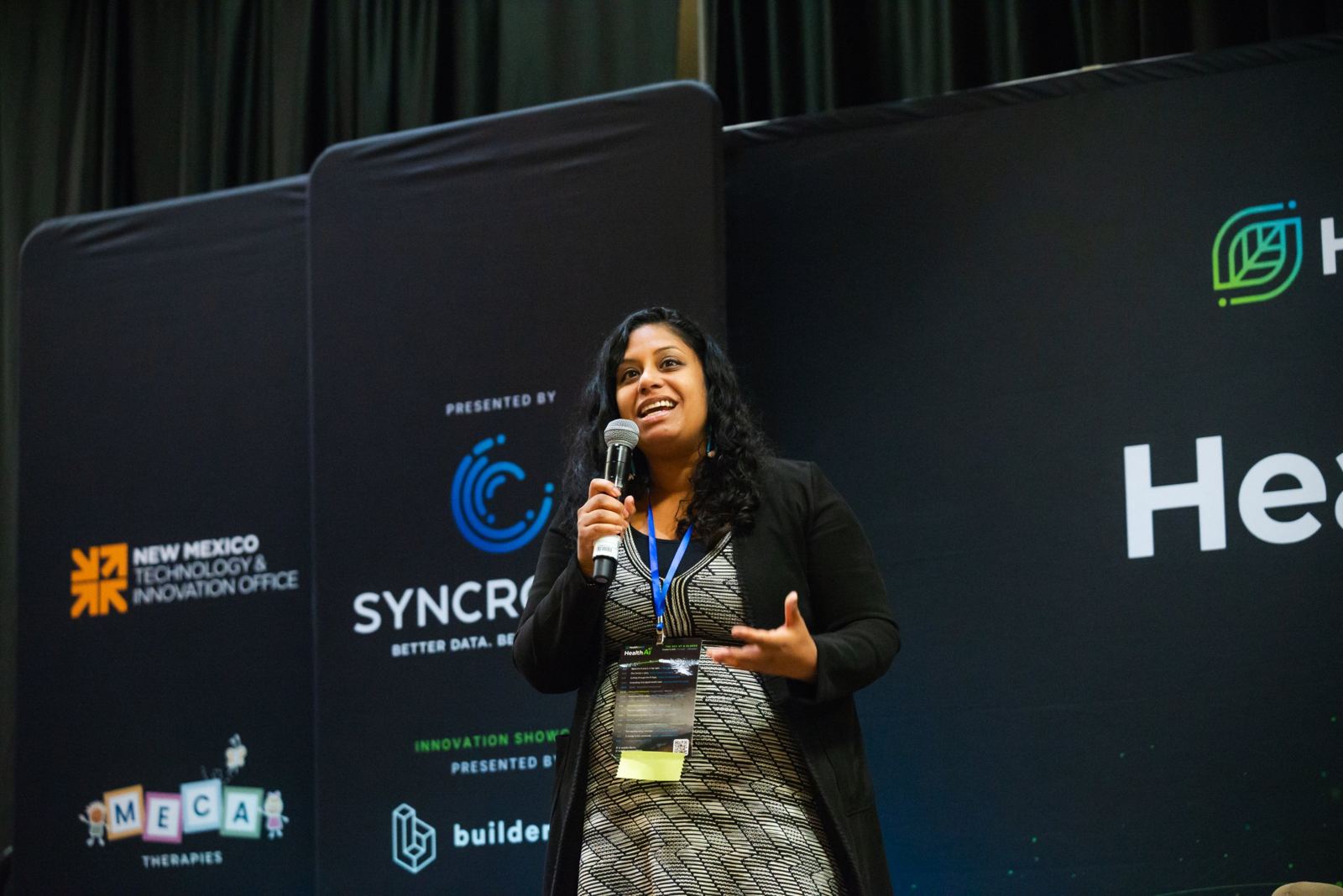
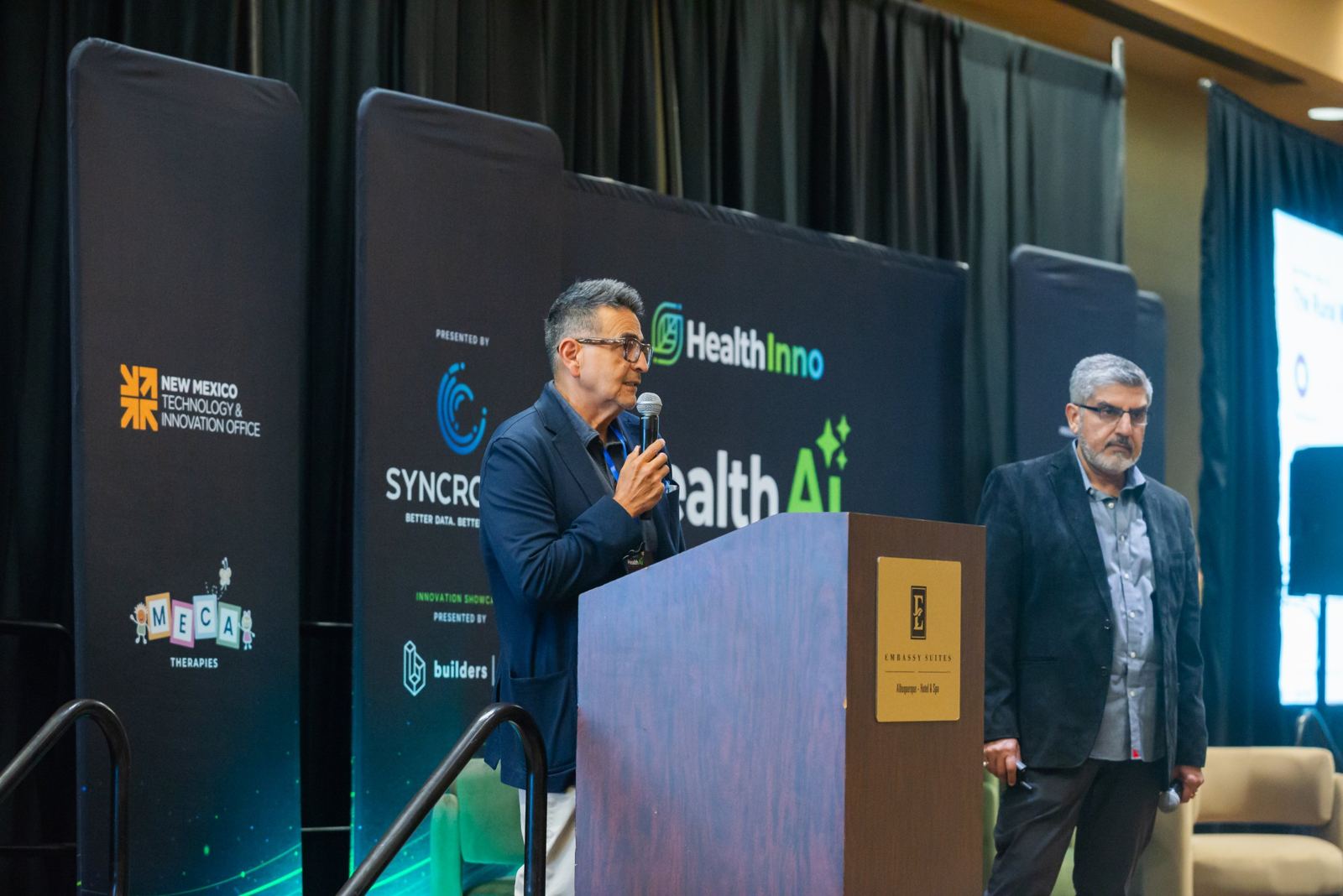
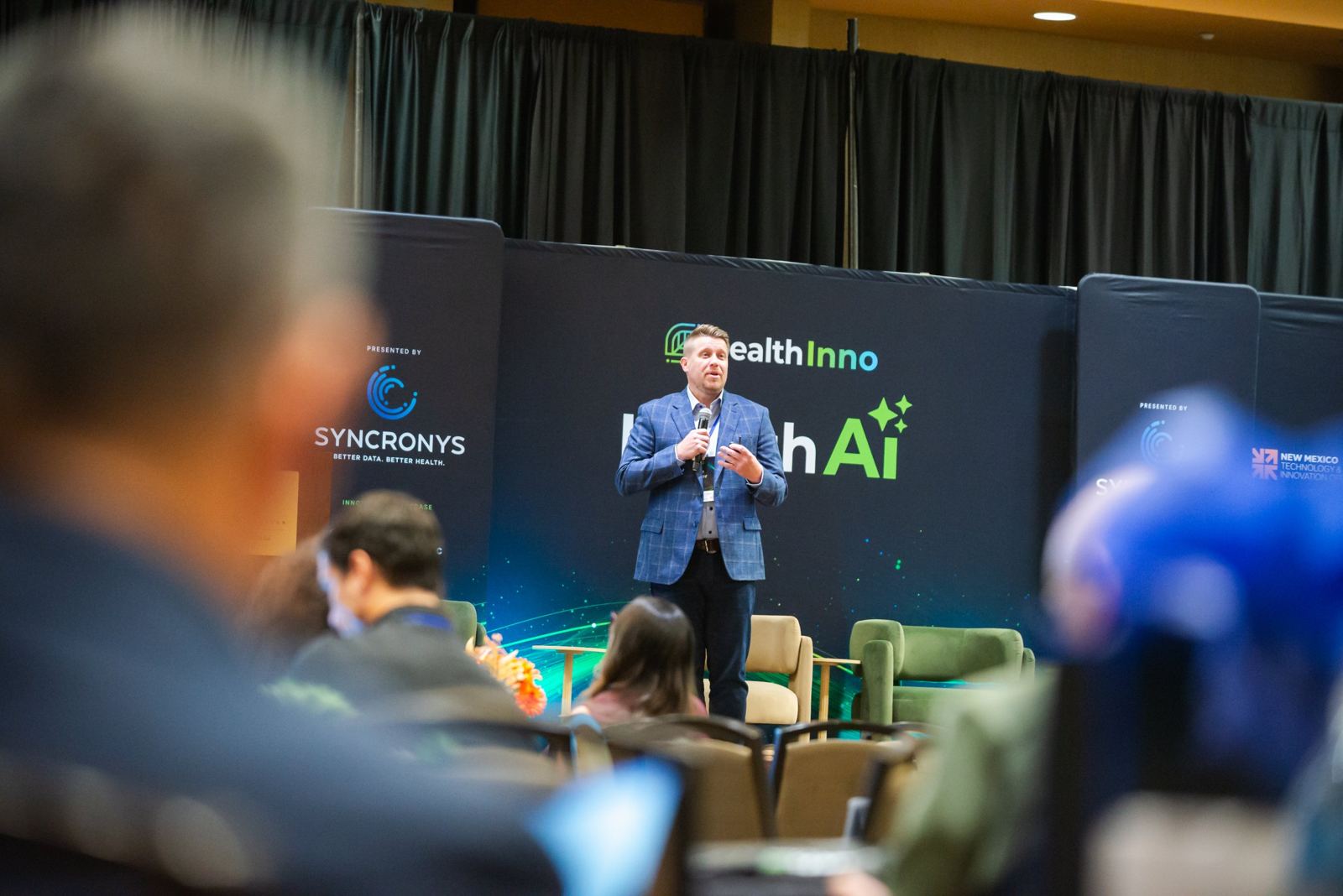
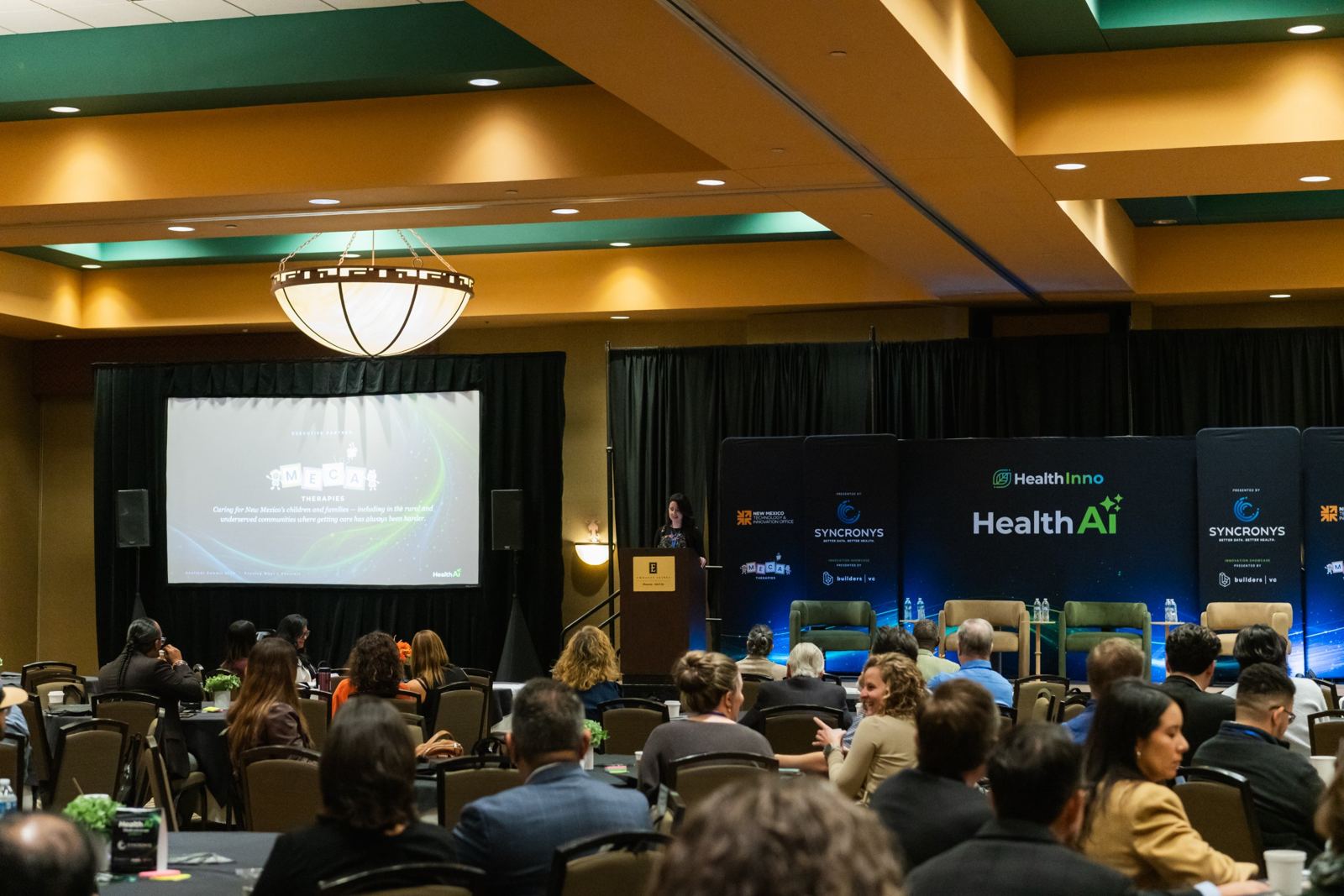
Second annual summitOctober 8, 2026Embassy Suites, Albuquerque
HealthAI 2026: What We Learned
More than 200 people from healthcare, research, technology, entrepreneurship, policy, and investment gathered around New Mexico care. Here's what they shared.
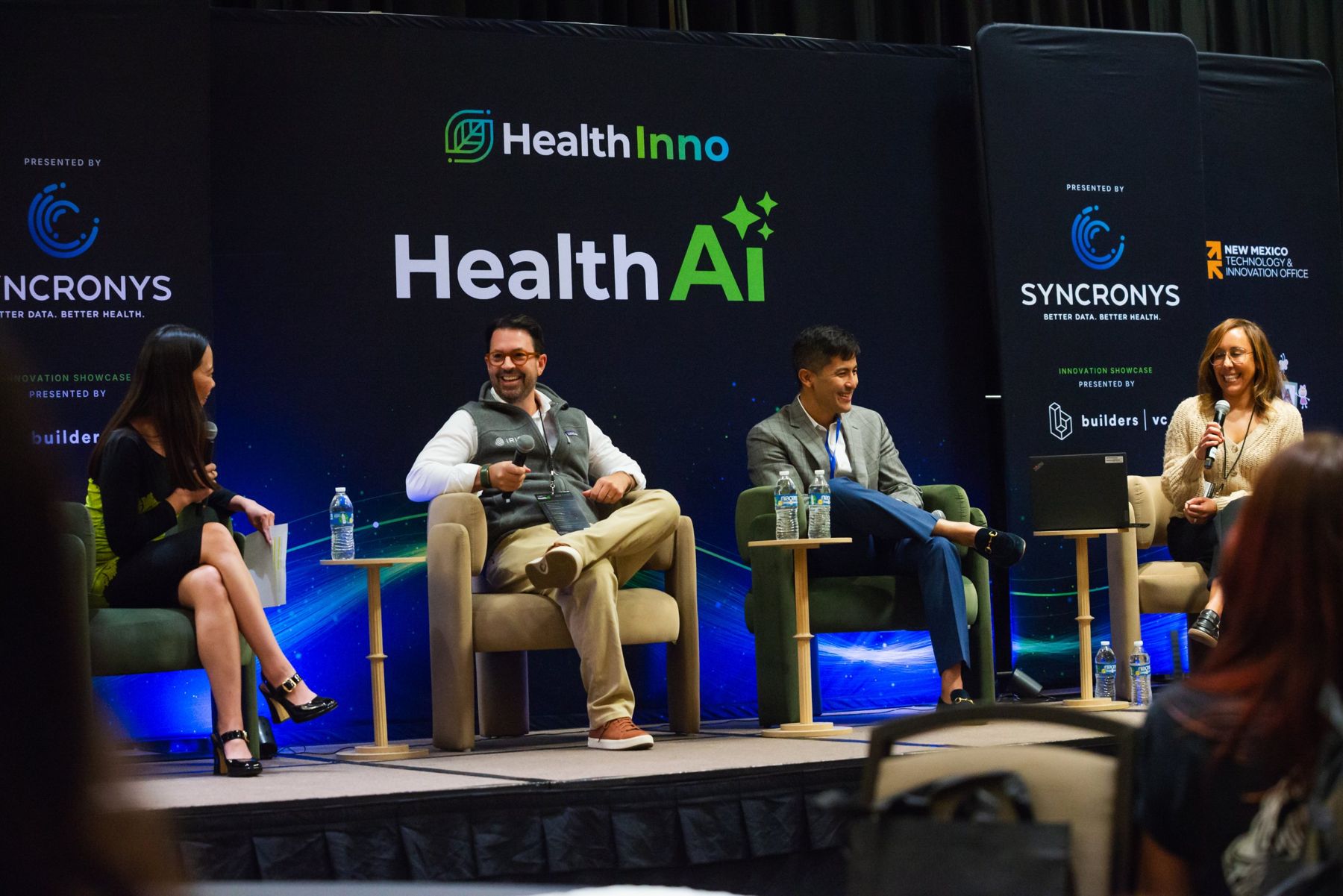
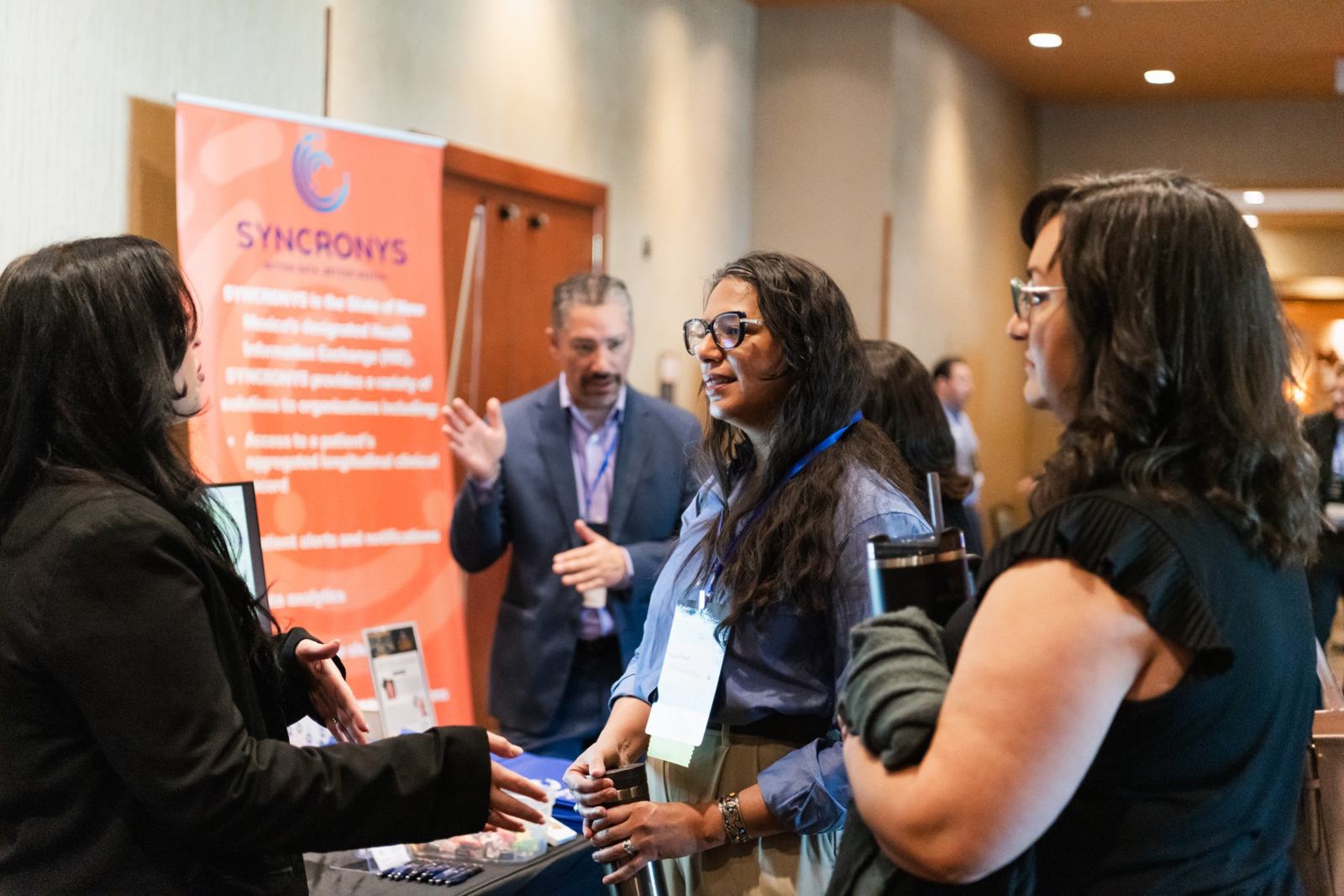
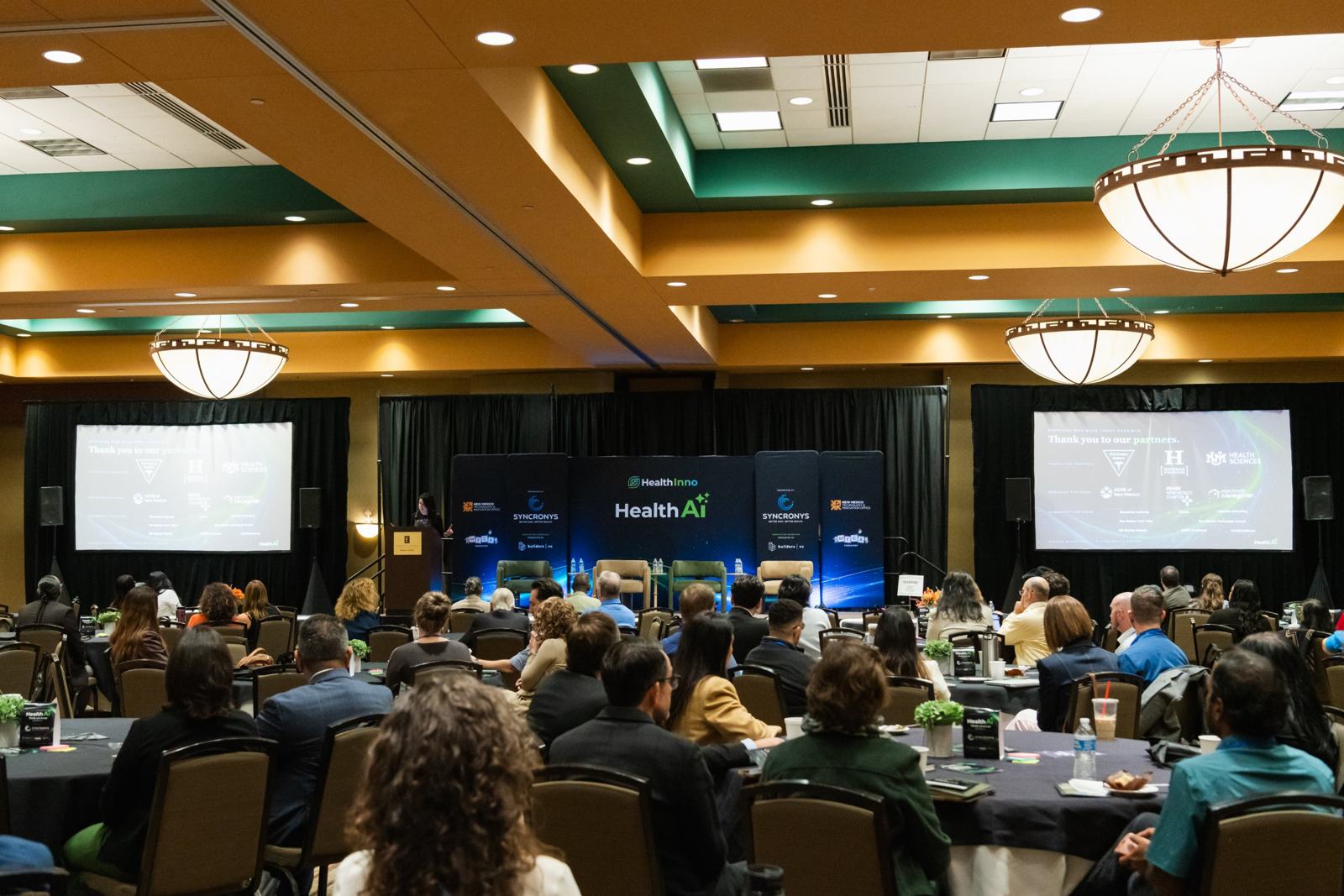
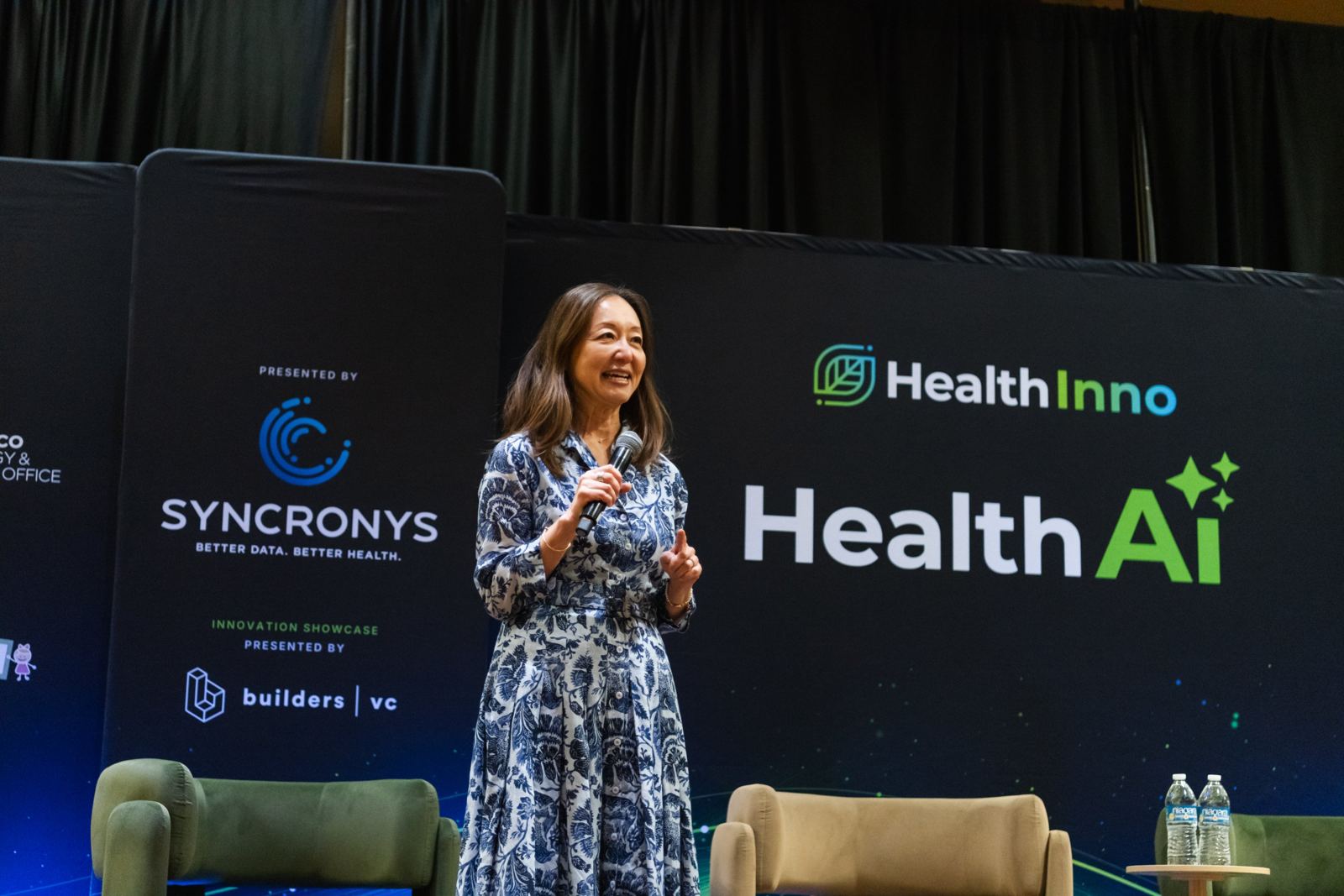
SYNCRONYS, New Mexico's health information exchange, presented HealthAI 2026 and helped open the day.
Executive sponsors
MECA Therapies presented The First 1,000 Days. The New Mexico Technology & Innovation Office co-presented the Ecosystem Breakfast.
Innovation & startup showcase sponsor
Builders VC brought six national and New Mexico companies to the stage.
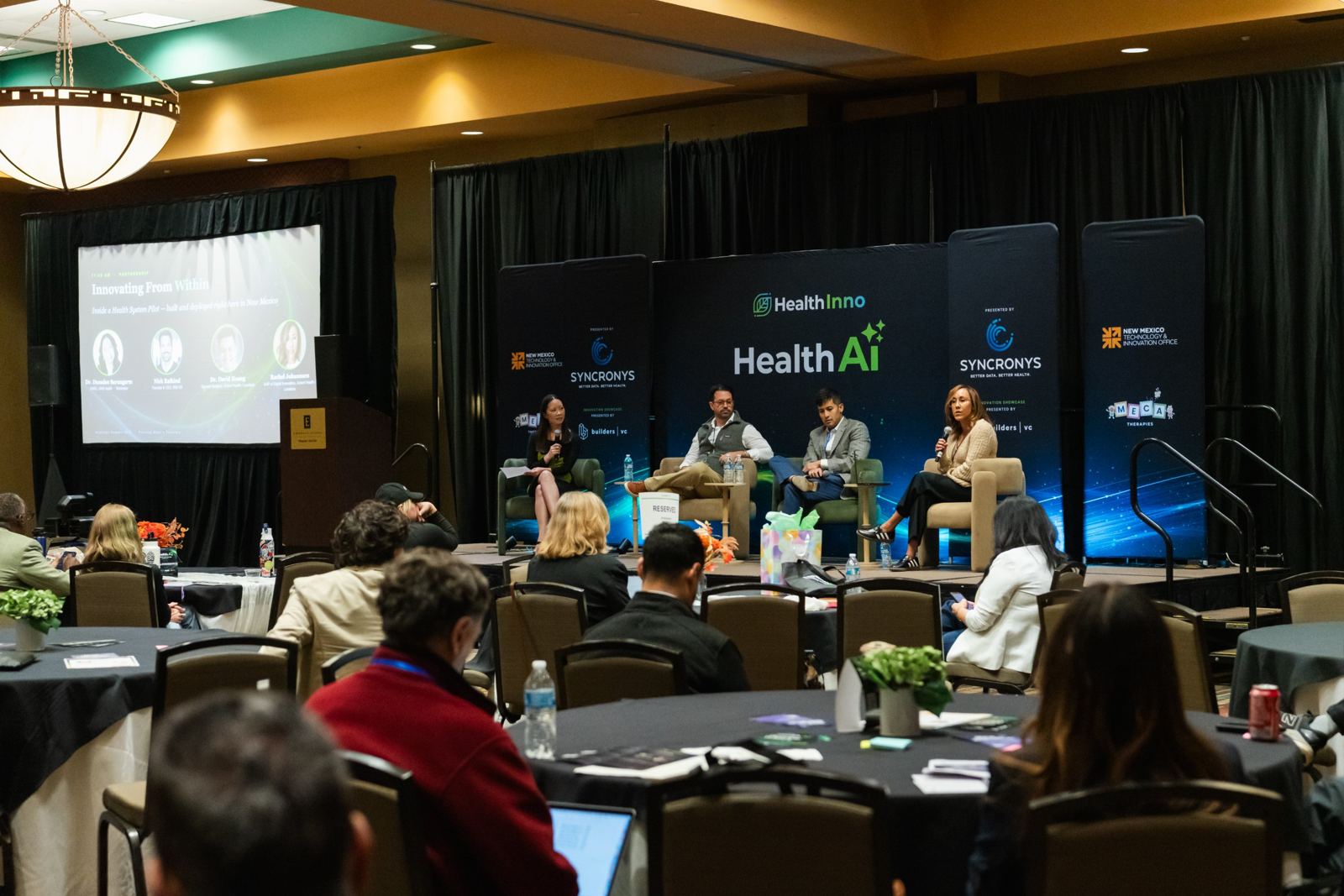
Innovating From Within: inside a health system pilot built and deployed in New Mexico.
Across care and technology
Shared Priorities for New Mexico Care
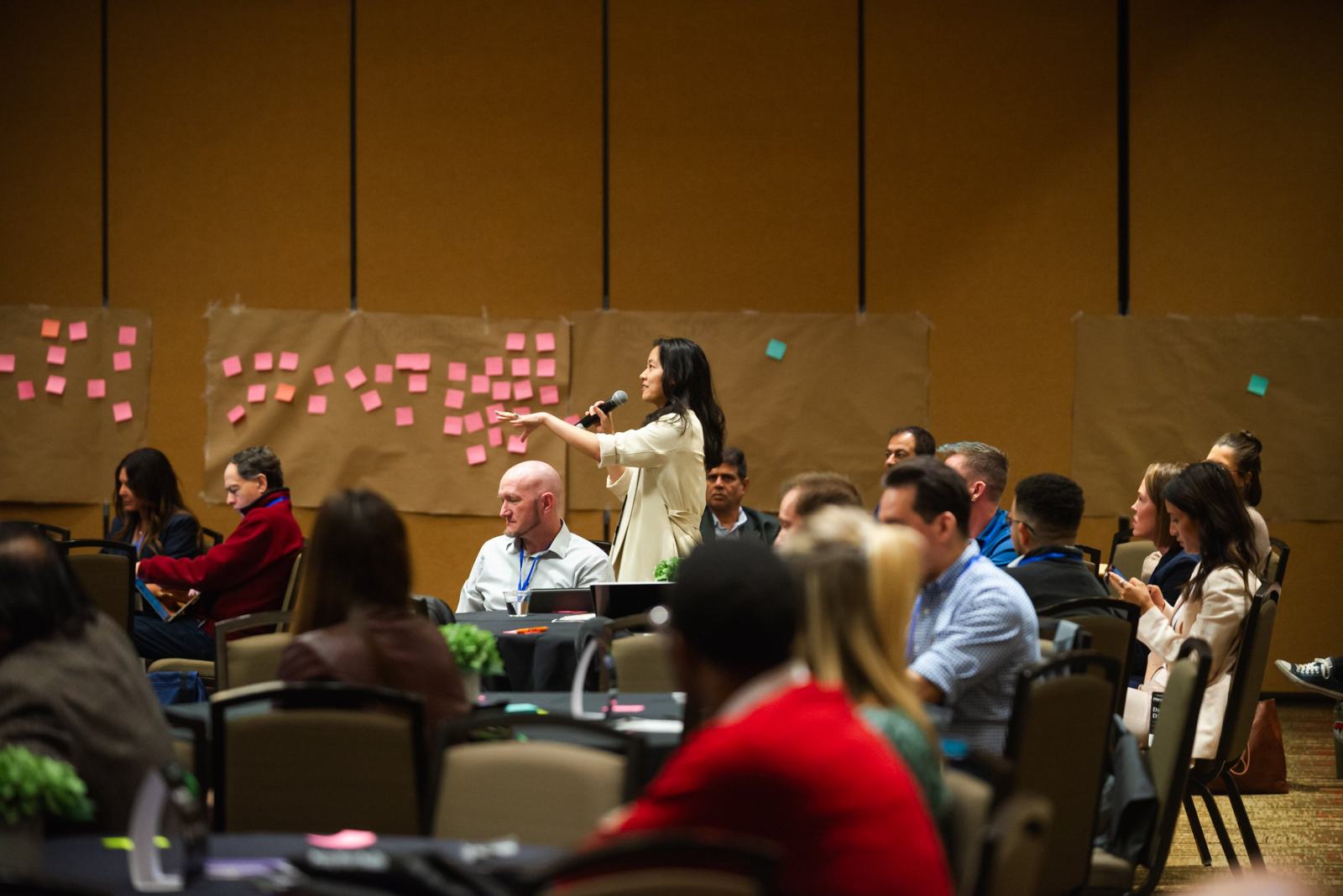
The day explored AI, maternal health, rural care, and new approaches. Conversations continued at 20 themed lunch tables, the Ecosystem Breakfast, and two interactive walls.
New Mexico's care context
23tribal nations and pueblos call New Mexico home
1 in 3New Mexicans get their coverage through Medicaid or CHIP
150,000+healthcare jobs, already the state's largest employer, and growing
1 in 3New Mexico counties are maternity care desertsMarch of Dimes, as presented by Bloomlife
Critical Access Hospitals, rural clinics, and community health centers serve New Mexico across long distances. New tools must fit those settings.
200+people across healthcare, research, tech, policy, and investment
21speakers, from national leaders to New Mexico builders
6startups presented after related sessions
20lunch topics, from tribal health to value-based care
2walls: morning challenges and afternoon ideas
1shared program for the whole room
Who came, and why
What Brought People Together
A senior, mostly New Mexico-based room, led by healthcare organizations and the partners who work with them. About half came for AI strategy and governance, and more than two-thirds were open to exploring new technology.
228registered
128organizations across 9 sectors
26%healthcare organizations and payers
29%health-tech and emerging companies
44%hold an executive title
86%based in New Mexico
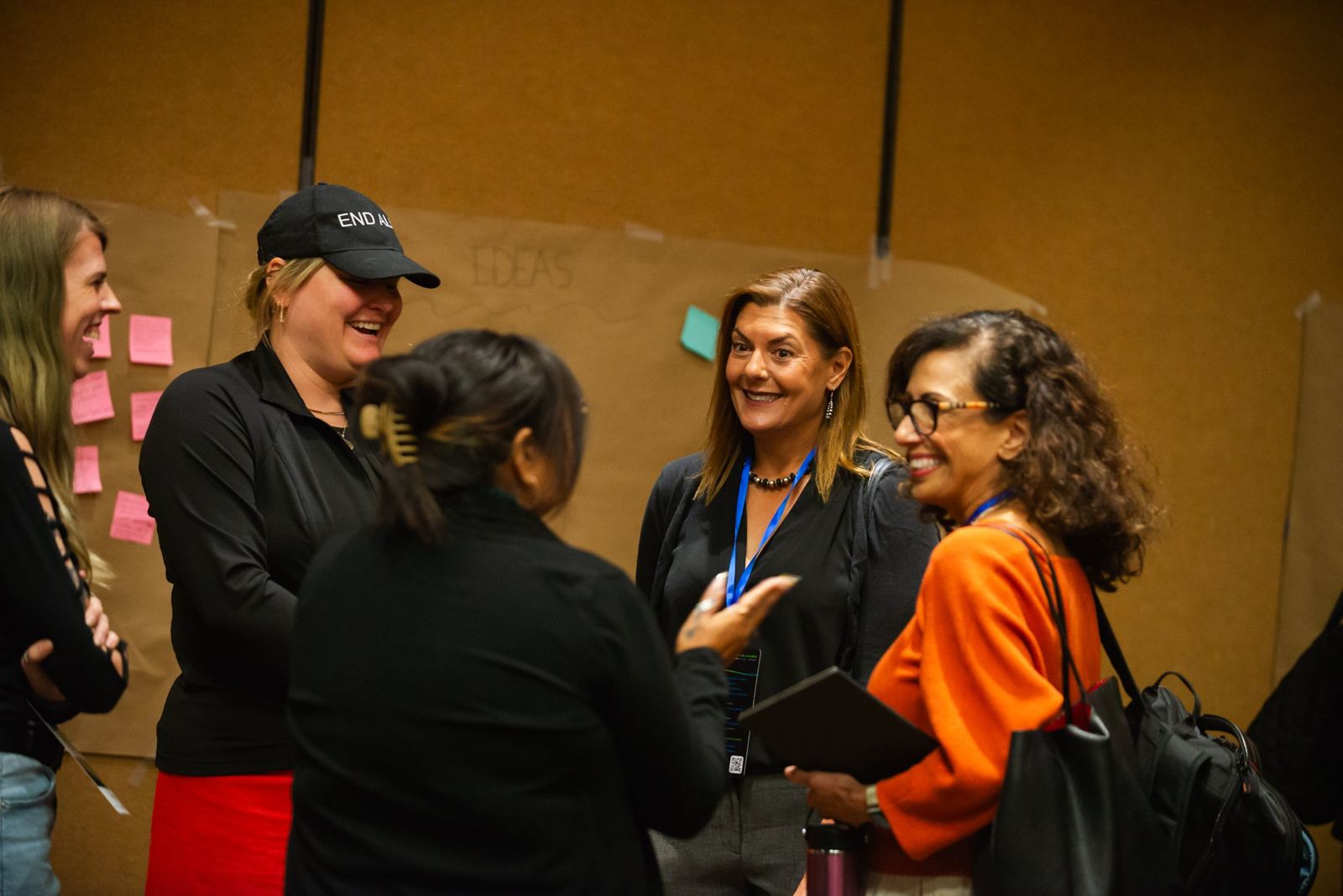
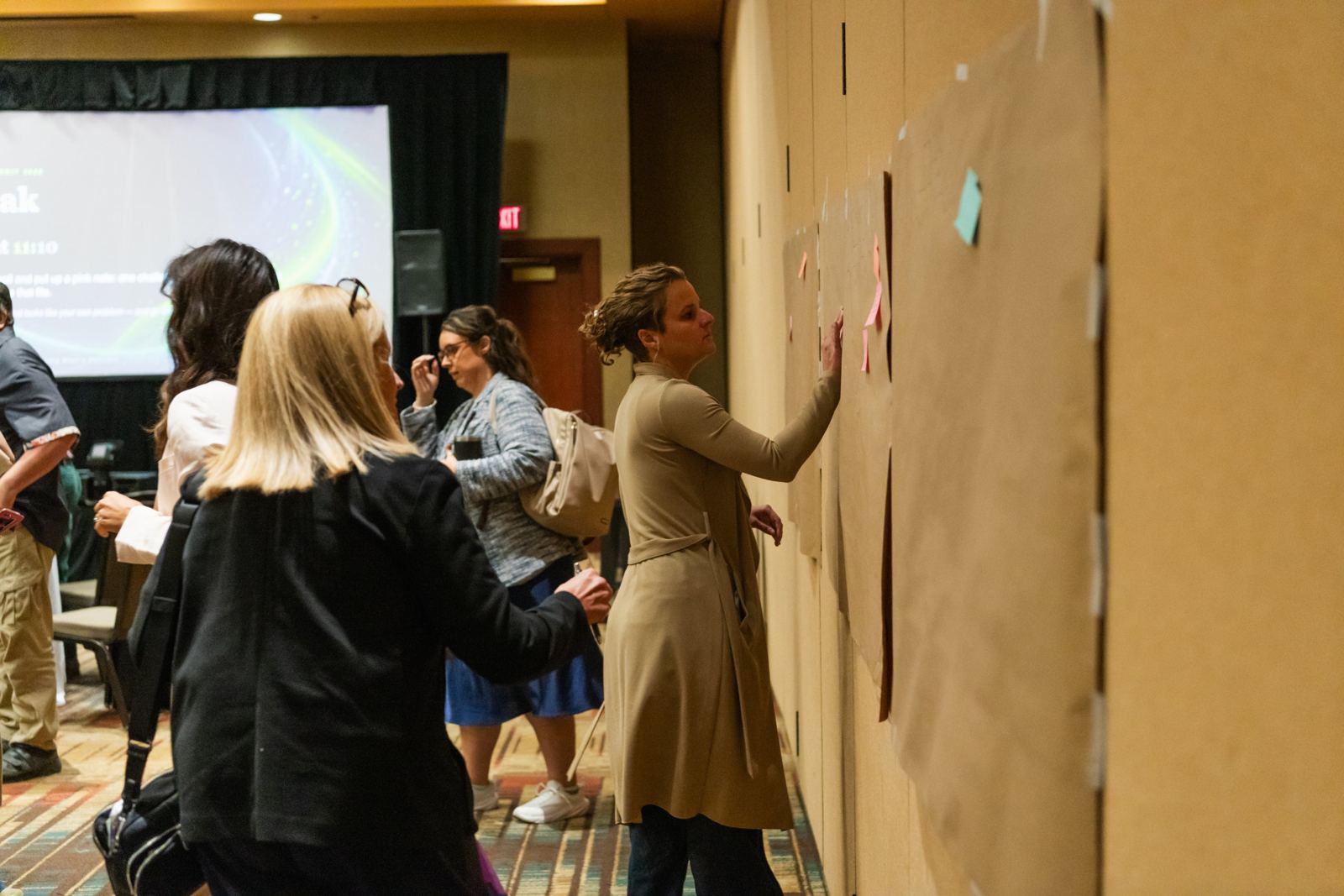
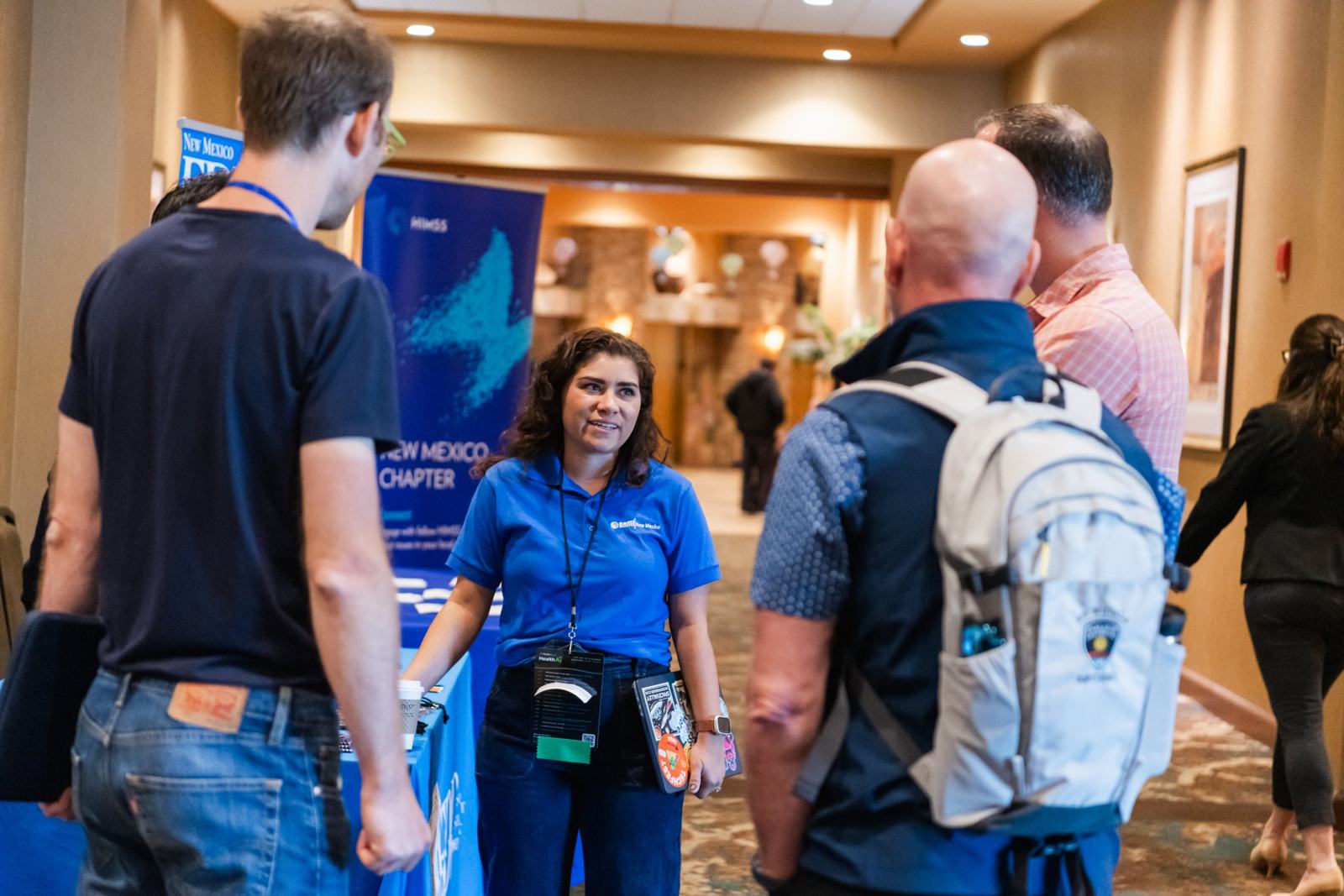
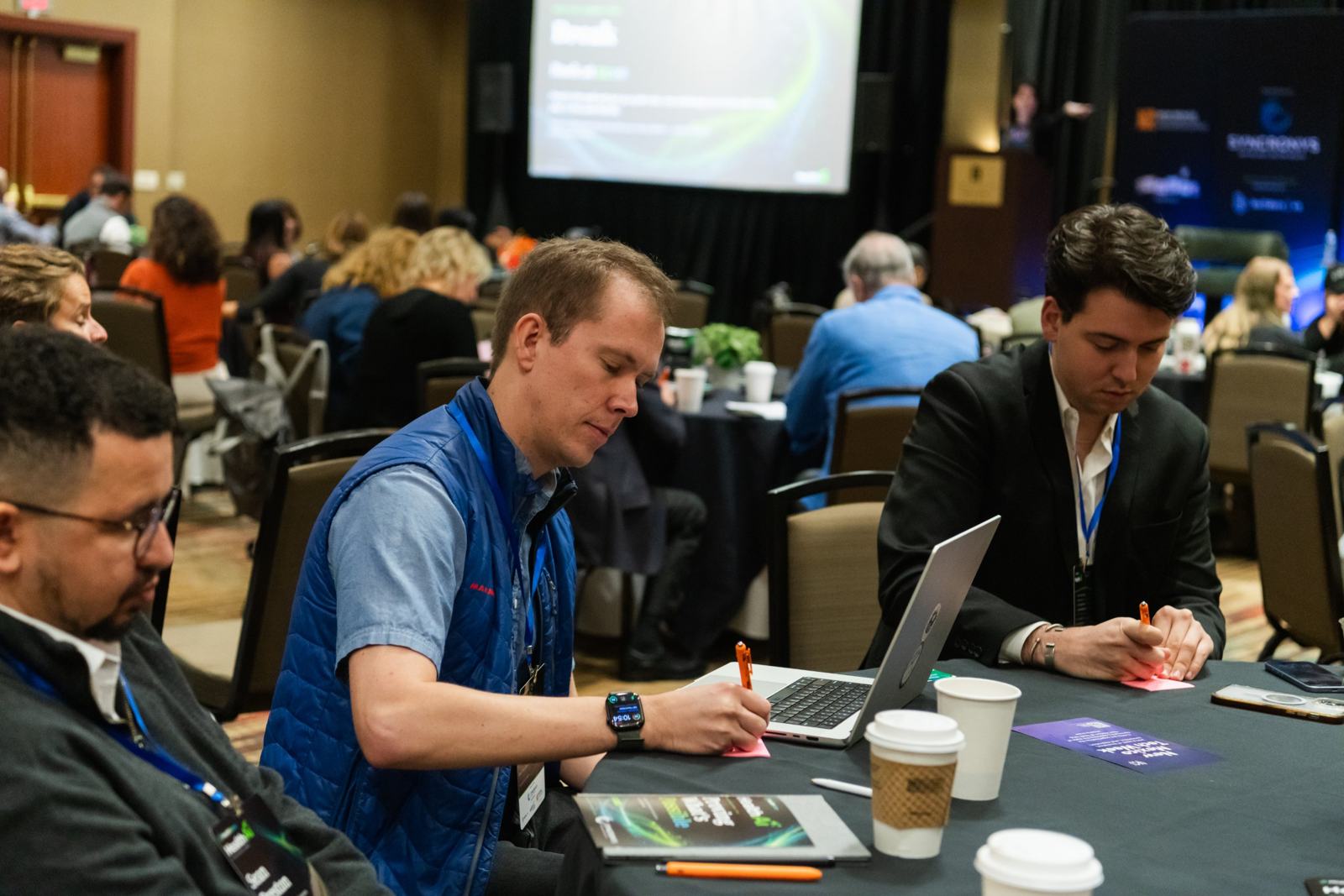
Connections at the wall during a break.
Themed lunch tables helped people compare notes on shared interests:
Healthcare organizations and payers, from health systems and FQHCs to behavioral health, home care, and Medicaid plans, made up about a quarter of the room, roughly even with the companies building for them. The rest were the research, government, nonprofit, and funding partners who help good ideas reach practice.
Top priority topics
Registrants chose up to three
Half chose AI strategy and governance. Among care topics, telehealth and remote monitoring, population health, behavioral health, and rural health led. Also chosen: quality, maternal and infant health, bioscience, equity, workforce, chronic disease, social needs, tribal health, cancer care, and revenue cycle.
Open to exploring innovative technologies
Registrants who answered
YesWould like to learn moreNot applicable to my roleNo
At registration, we asked whether people would be open to exploring new technology in their organization. 71% said yes or wanted to learn more, and only 4% said no. Among healthcare organizations and payers who answered, more than four in five were open. This was a room ready to act, not just to listen.
Seniority
Named registrants
44% hold an executive title, many of them founders. On the buyer side, directors and managers were the largest group: the people who run a pilot day to day.
Where people came from
Named registrants
86% are based in New Mexico; half are in the Albuquerque area, with Santa Fe, Las Cruces, and Rio Rancho well represented. Most out-of-state registrants were visiting company teams.
Source: HealthAI 2026 registration data. Counts are registrations, not confirmed attendance.
From the stage
Lessons From the Stage
Why health innovation matters now, what AI can actually do, how health systems evaluate tools, what patients will expect next, and a charge to New Mexico to start proving what's possible.
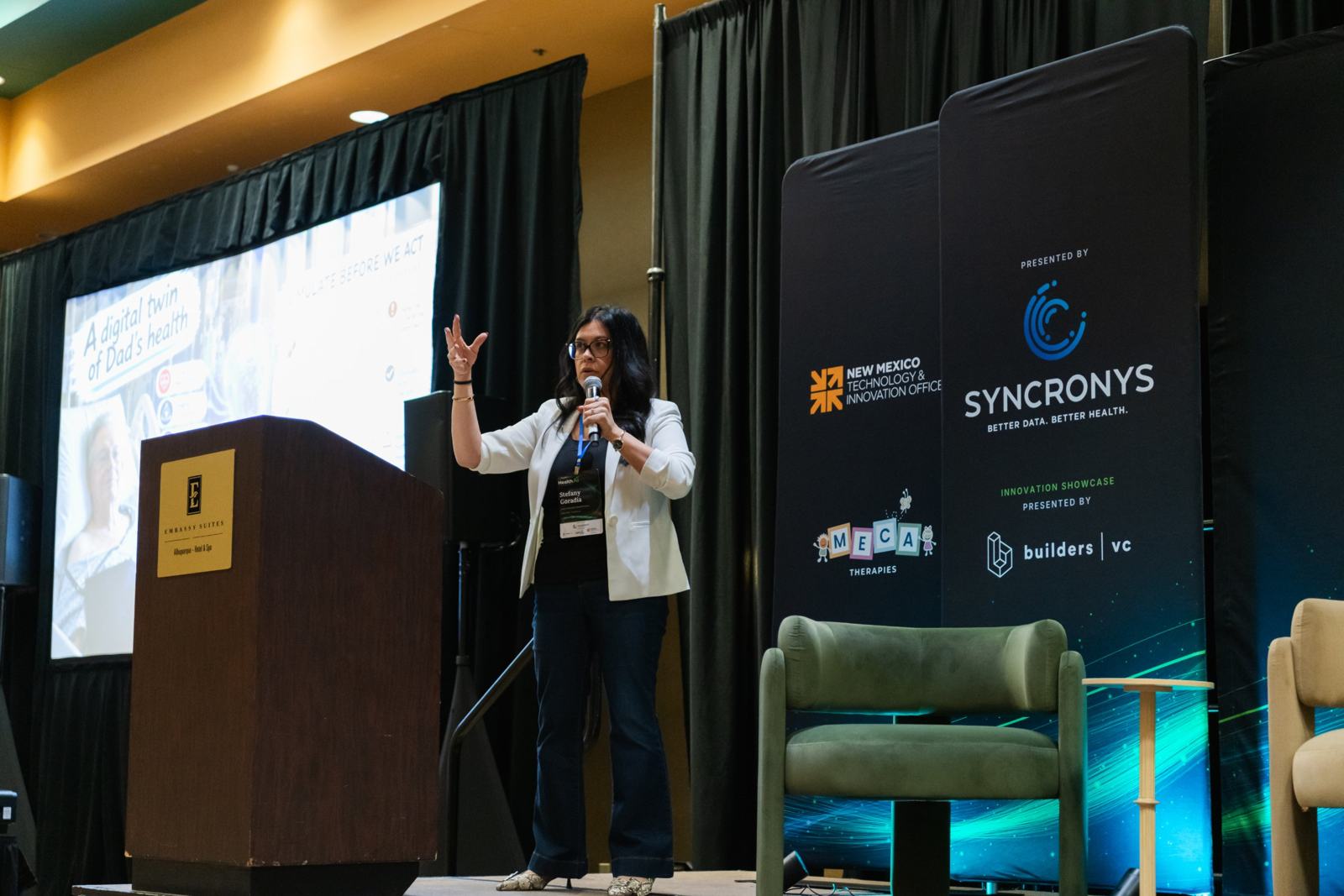
Stefany GoradiaAdvisor, HealthInno · Head of Population Health & Data, UNM Center for Health Policy · One family's story
Why Health Innovation Matters Now
Stefany opened the day with her own family's healthcare journey and the places it broke down, then asked the room to imagine a different future and carry that question through every session.
The gaps are familiar to anyone who has navigated care for a parent or child.
Each one is a place where better data, coordination, or technology could have changed the outcome.
Innovation matters when it reaches the people who need it most.
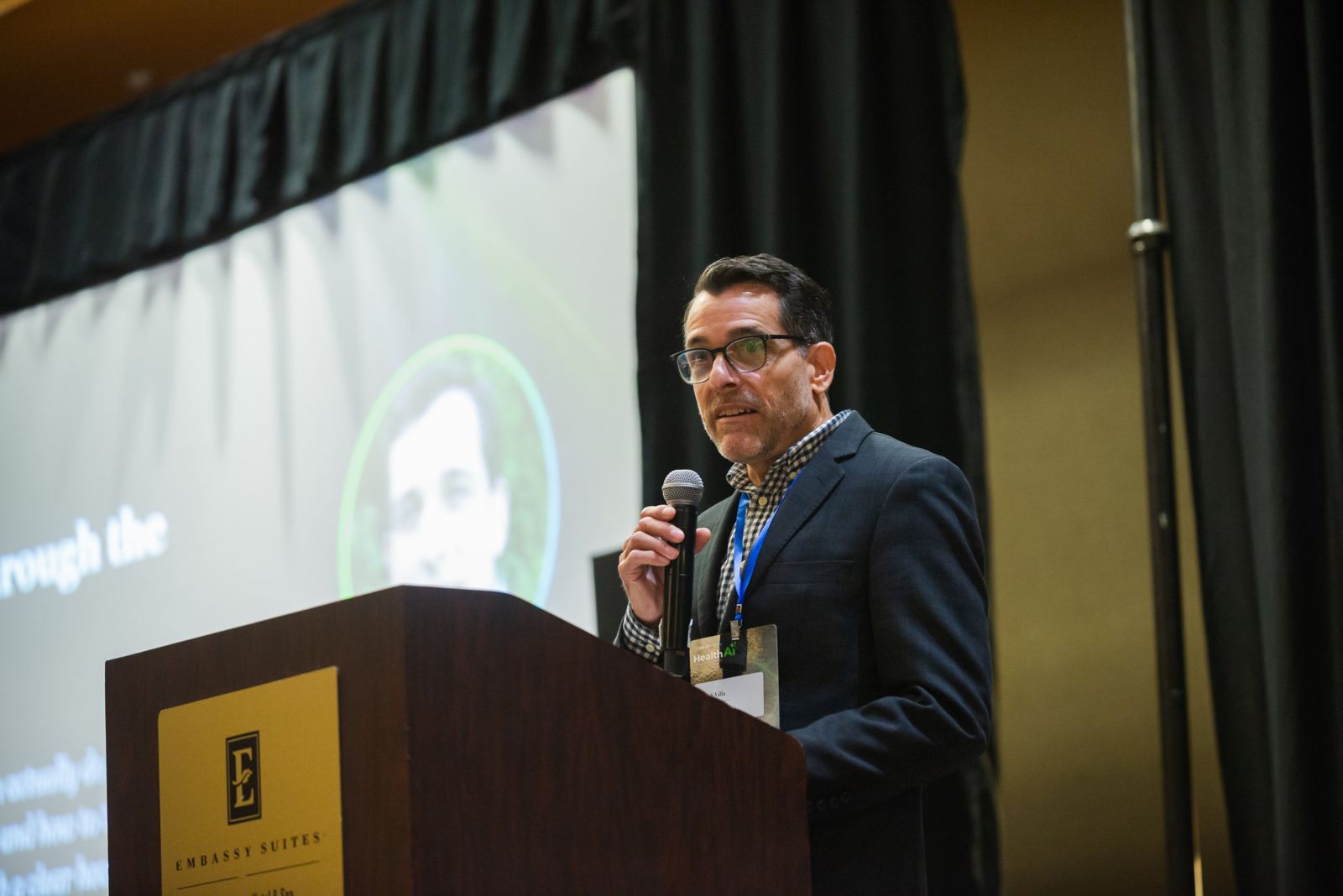
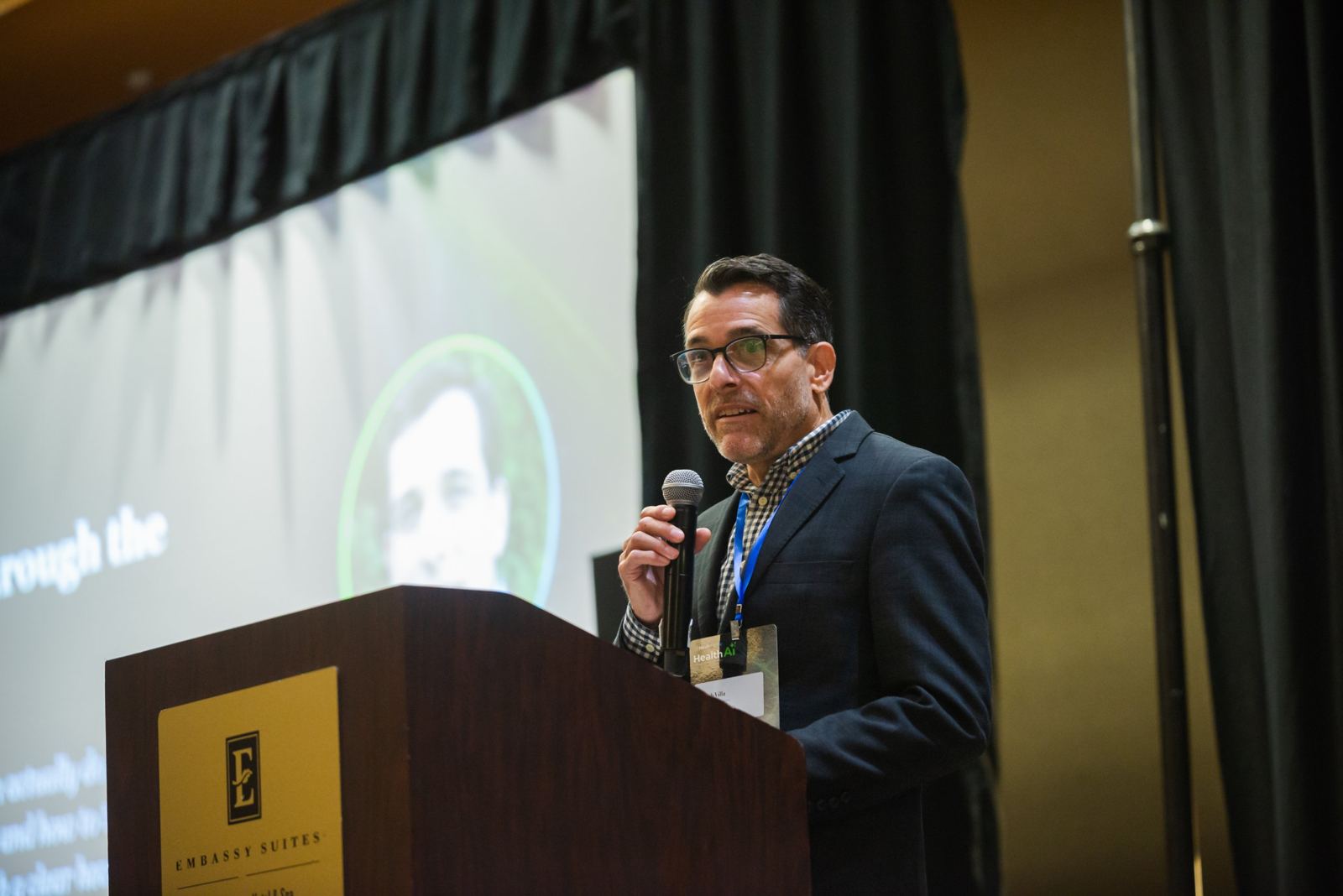
Joseph VillaFounder & CEO, Bigbee Labs · Cutting through the AI hype
Know What AI Can Do
Joseph Villa showed how models turn speech into transcripts, transcripts into notes, prose into structured data, and images into detections. He warned against "AI washing": routine workflows sold as autonomous intelligence.
Know your error rate.
Know what checks miss.
Weigh consequences: a wrong appointment time differs from a wrong diagnosis.
Make a cost-benefit decision.
His prediction: an AI market correction, followed by lasting use cases that prove their value.
Ling KungSr. Director, Care Delivery Technology, Kaiser Permanente · How the decision gets made
Start With the Clinical Problem
Ling Kung shared Kaiser Permanente's three evaluation lenses and six questions for vendors.
ViabilityDoes the business case hold at our scale?
FeasibilityCan we build, integrate, and run it?
DesirabilityDo members and clinicians actually want it?
How was the model trained?How diverse is the training data?How was it validated?What happens when it's wrong?How is it monitored after go-live?How transparent is the vendor?
Define the problem and what success looks like.
Learn fast.
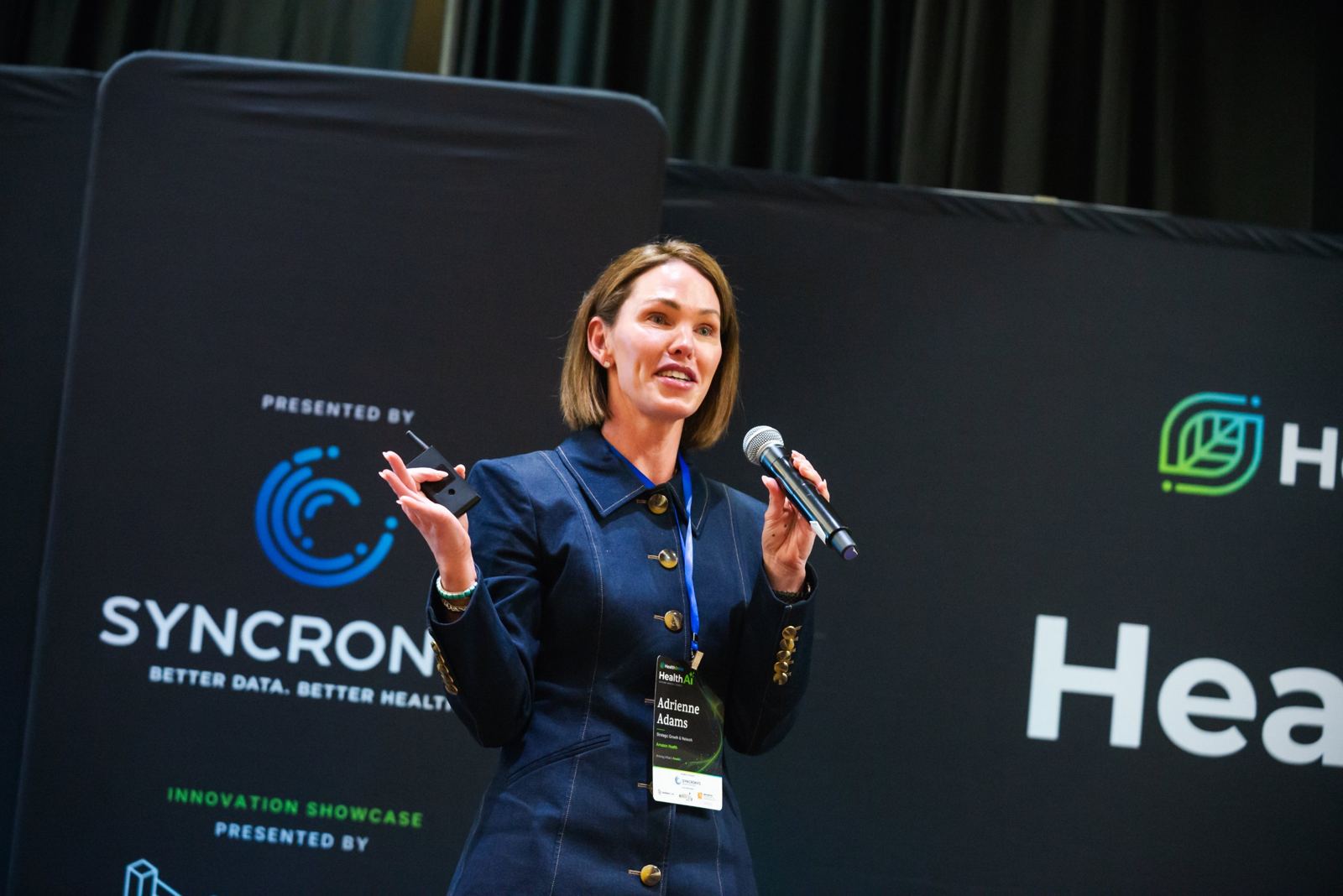
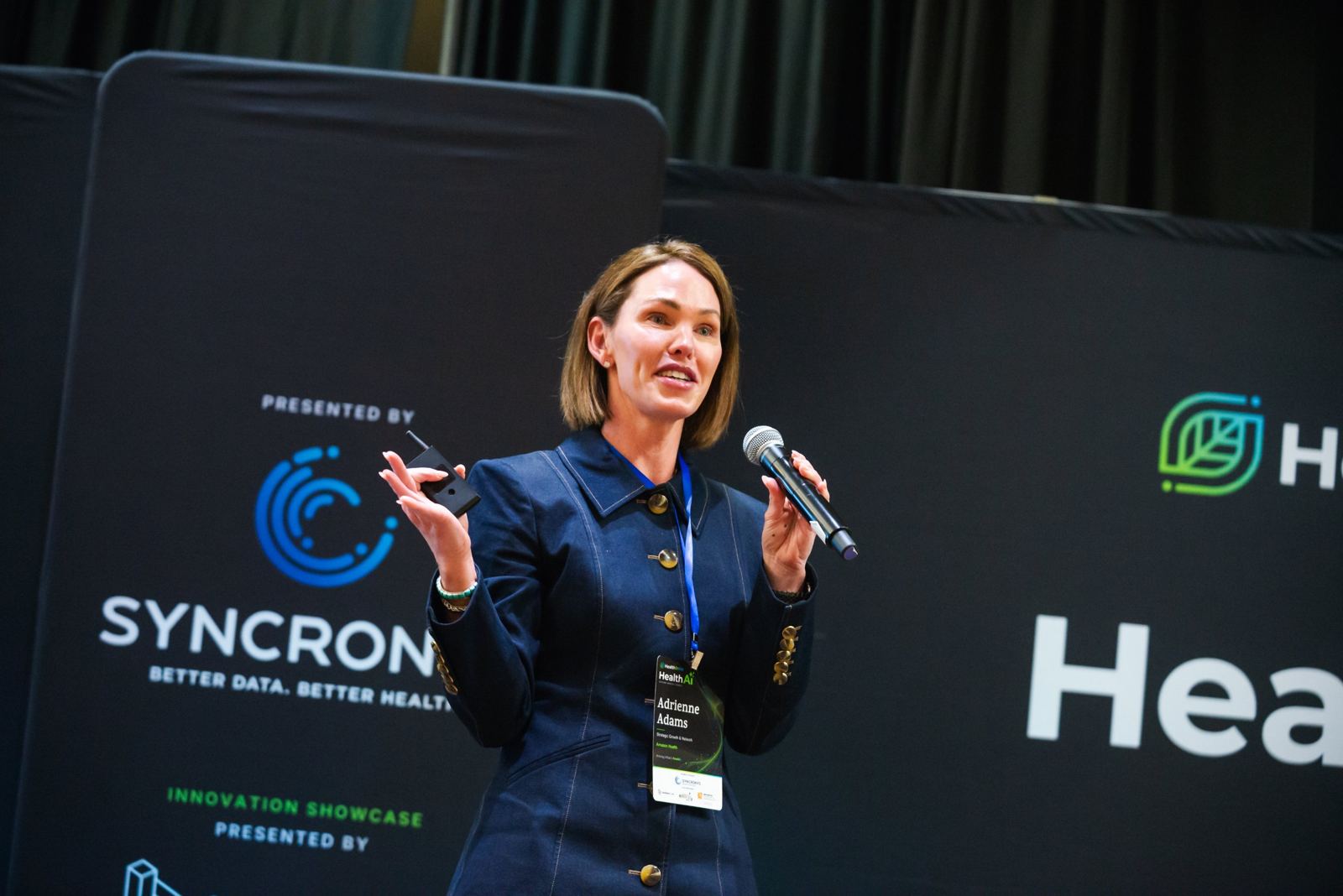
Adrienne AdamsStrategic Growth & Network Development Leader, Amazon Health — One Medical · Consumer-first, tech-enabled
What Patients Will Expect Next
Drawing on how Amazon One Medical builds consumer-first, tech-enabled care at national scale, Adrienne Adams looked at what patients will expect over the next five years, and what has to be true for organizations of any size to meet them there.
Patients now expect from healthcare what they expect everywhere else: access, convenience, and clarity.
The technology behind the experience matters less to patients than whether the experience works.
Organizations of any size can meet that bar with the right partners and priorities.
Angelica MaestasFounder, HealthInno · Strategic Partnerships, Builders VC · A charge to the community
Move Beyond Patience
Angelica closed the day by challenging New Mexico to stop waiting for other states to figure it out first, and to take the day's conversations back to their organizations and start proving what's possible here.
New Mexico's complexity is an asset: if it works here, it works everywhere.
The room already holds the partners a pilot needs.
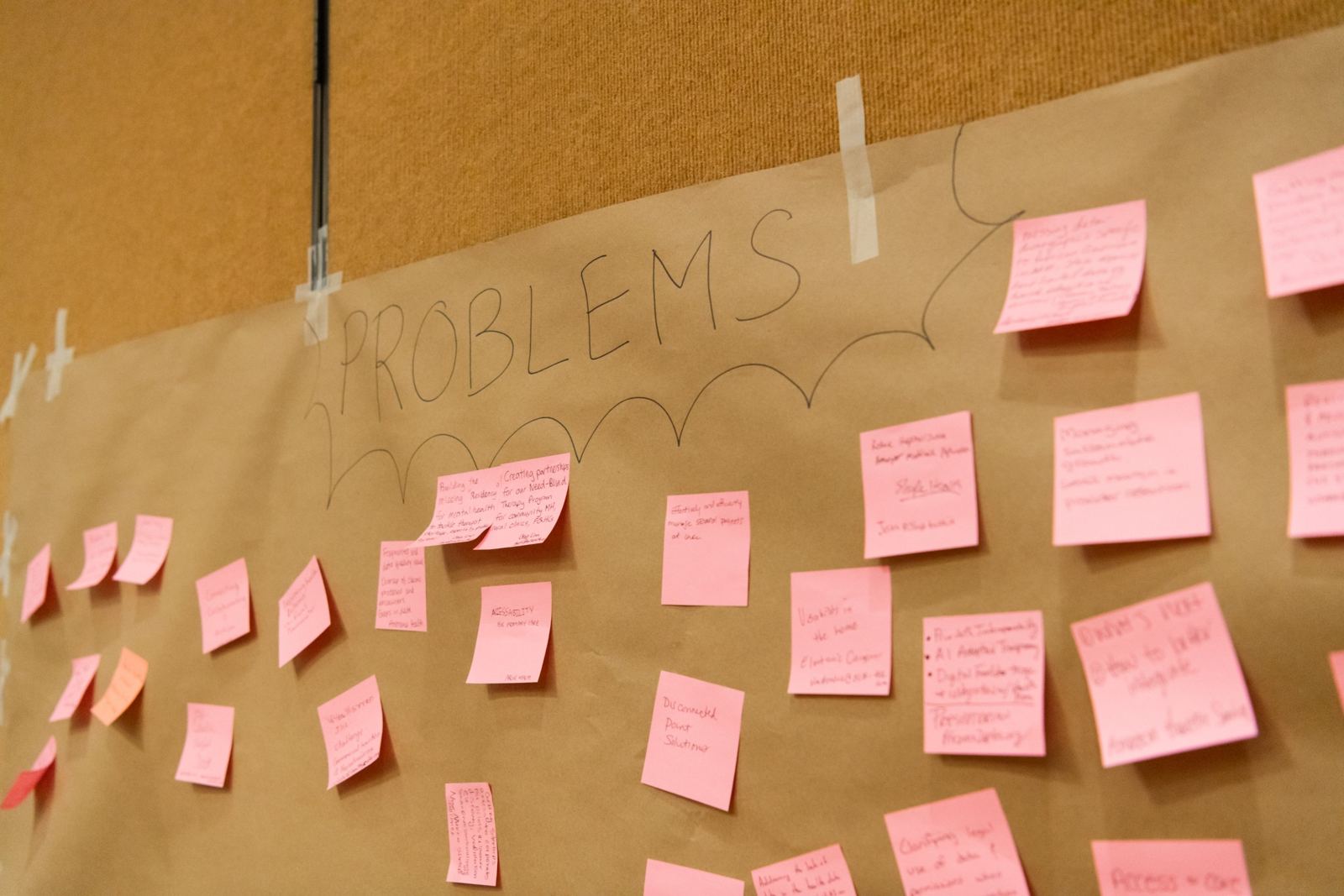
Participants named five care and technology challenges at the Problem Wall.
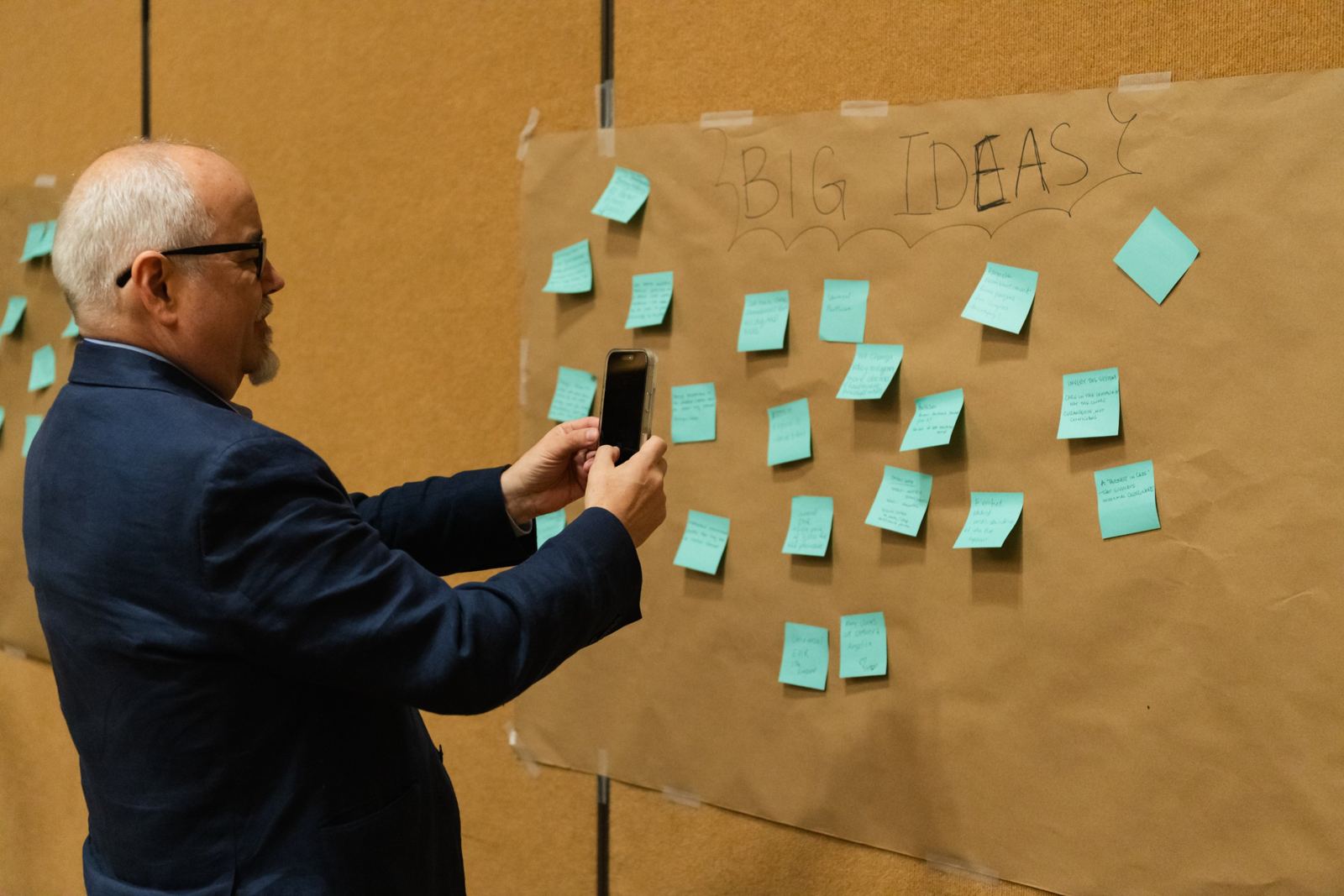
The morning Problem Wall used pink notes. The afternoon Big Idea Wall collected blue ones.
Health Information That Doesn't Connect
Attendees flagged disconnected EHRs, unreliable data, inaccurate diagnoses or medications, mismatched test results, and claims gaps. Trusted records are essential for AI.
Rural Access to Care
Access to specialists, primary care, behavioral health, affordability, and workforce capacity surfaced. Telehealth and remote monitoring could strengthen rural care.
Care Coordination and Navigation
Missed handoffs leave patients and families navigating care alone. One participant described weeks after discharge before a care team knew.
Using AI in Clinical Workflows
Attendees explored AI for documentation and prior authorizations, with people reviewing outputs. Good data and oversight matter.
Funding and Lasting Partnerships
Pilot funding, reimbursement, clinical validation, and startup access to health systems surfaced. Smaller innovators asked where early funding comes from. Technology needs evidence and support to reach care settings.
Better data, coordination, and workflows reinforce one another. Promising tools also need clinical partners.
What we imagined
Six Ideas for Better Care
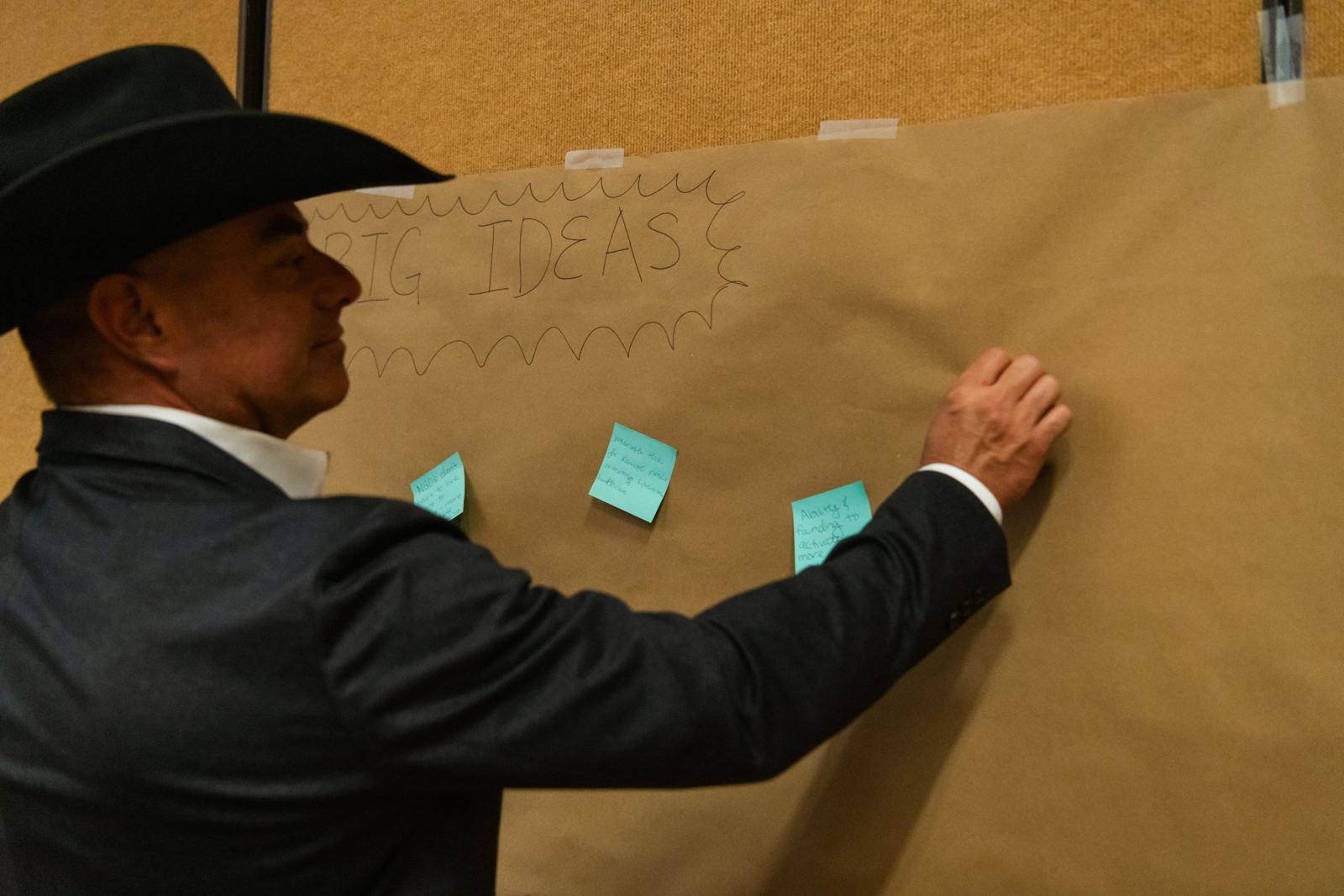
The afternoon Big Idea Wall captured six ways to improve care.
The afternoon Big Idea Wall drew photos from attendees.
One Connected Health Record
Attendees pictured a shared record for patients, families, and clinicians across settings.
Care Around the Whole Person
Care teams and specialists communicating across visits and organizations.
More Time With Patients
AI-assisted documentation and navigation, with clear oversight and less repetitive work.
Care Closer to Home
Faster specialist access, community services, rural infrastructure, and prevention.
Stronger Behavioral Healthcare
Better information sharing, treatment access, partnerships, reimbursement, and care delivery.
Supporting New Mexico Innovation
A health technology incubator, local startup partnerships, and support for testing and implementation.
From Challenges to Possibilities
Reading both walls together
Fragmented health records
A connected, portable health record
Disconnected providers
Coordinated, whole-person care
Administrative burden
Technology that gives clinicians more patient time
Rural access barriers
More accessible, community-centered care
Limited pilot and funding opportunities
Stronger research, validation, and implementation partnerships
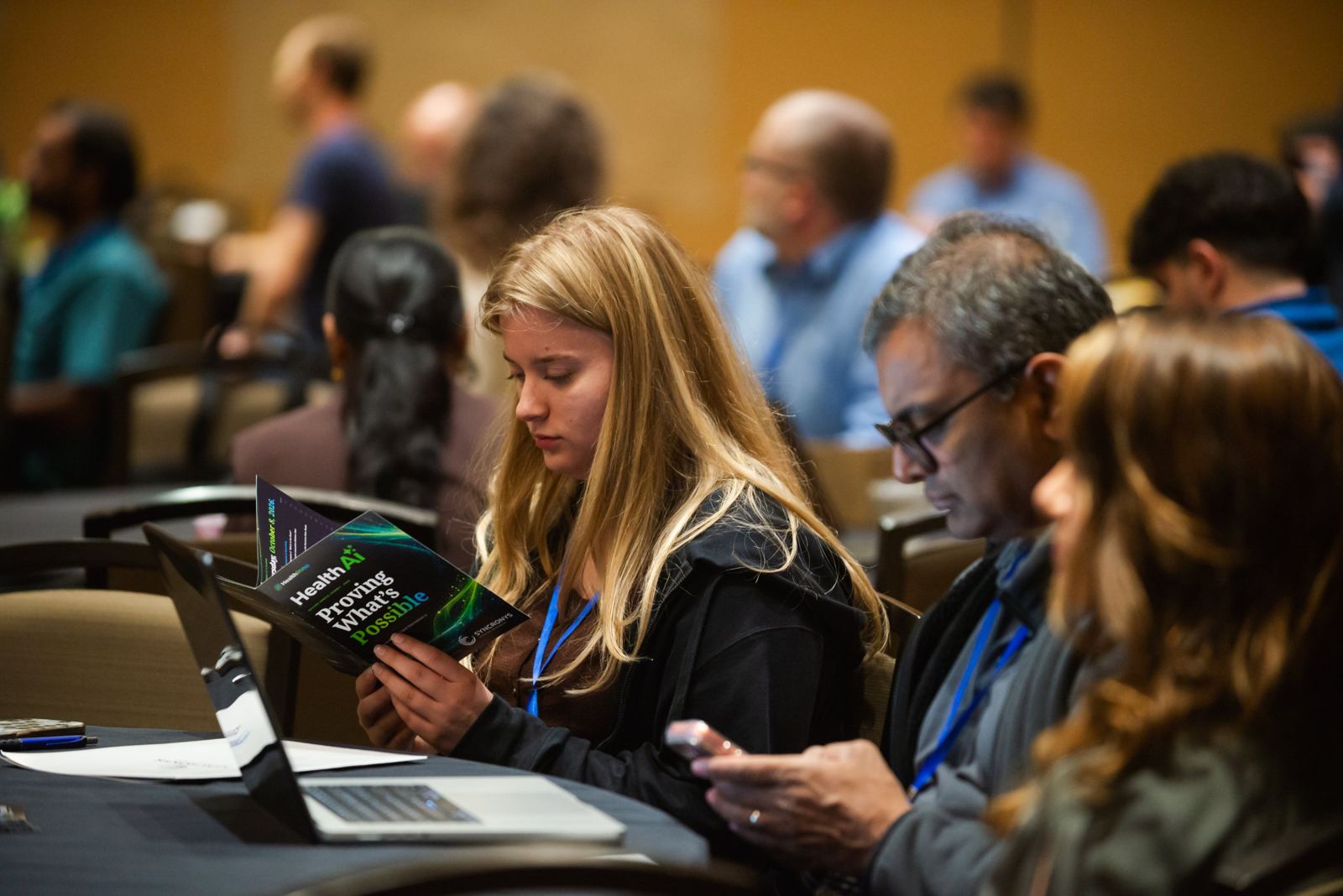
The printed program: one room, one track, three pillars.
Beyond the stage
One Program, Shared Learning
The audience followed one program. Company showcases followed related sessions. Three pillars guided the day.
PartnershipHealthcare organizations and innovators building pilots together.
PracticeUnderstanding AI, evaluating tools, and bringing them into care.
PossibilityWhat New Mexico can build through shared learning and partnerships.
9:00 AMWelcome, opening remarks & “Who's in the room”Opening
Who joined the room and the day's three pillars.
Greta McAnany, MCert, emceeTerri Stewart, SYNCRONYS, premier sponsor
9:20 AMOne family's storyWhy health innovation matters nowPossibility
Stefany shared gaps from her family's care journey and asked the room to revisit them throughout the day.
Stefany Goradia, HealthInno & UNM Center for Health Policy
9:40 AMCutting through the AI hypePractice
What AI can do today, where it falls short, and how to assess its claims.
Joseph Villa, Bigbee Labs
10:15 AMEvaluating AI & digital health toolsHow the decision gets madePractice
How Kaiser Permanente evaluates digital health tools: criteria, scoring, and evidence beyond a demo.
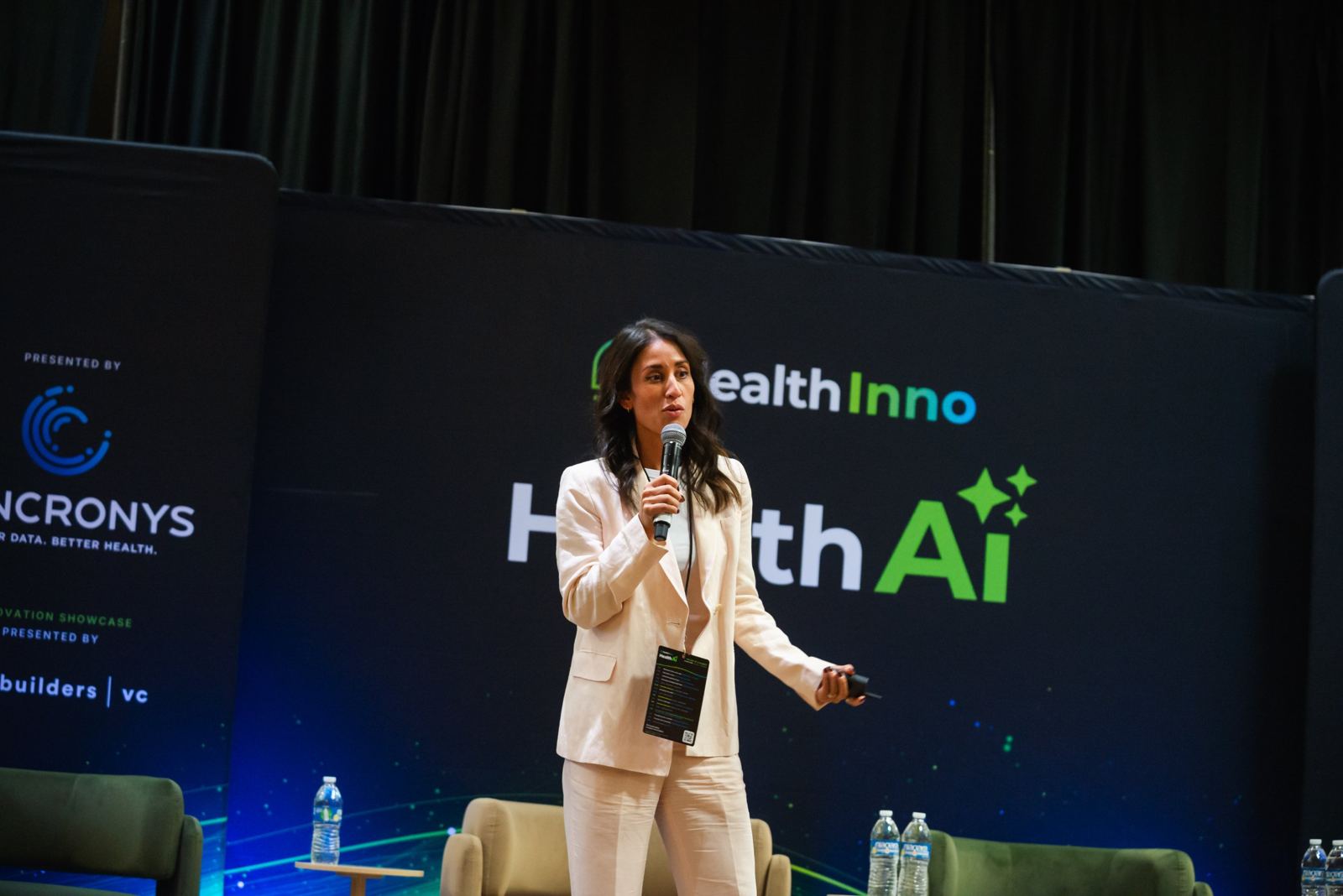
FDA-cleared maternal and fetal monitoring, plus New Mexico-built AI-enabled maternal care coordination.
Eric Dy, PhD, BloomlifeDr. Neepa Acharya, Adhara Health
2:15 PMThe first 1,000 daysHow reimagined care can change a lifetime · Presented with MECA TherapiesPartnership
Care delivery, health data, and philanthropy aligned around the first two years of life.
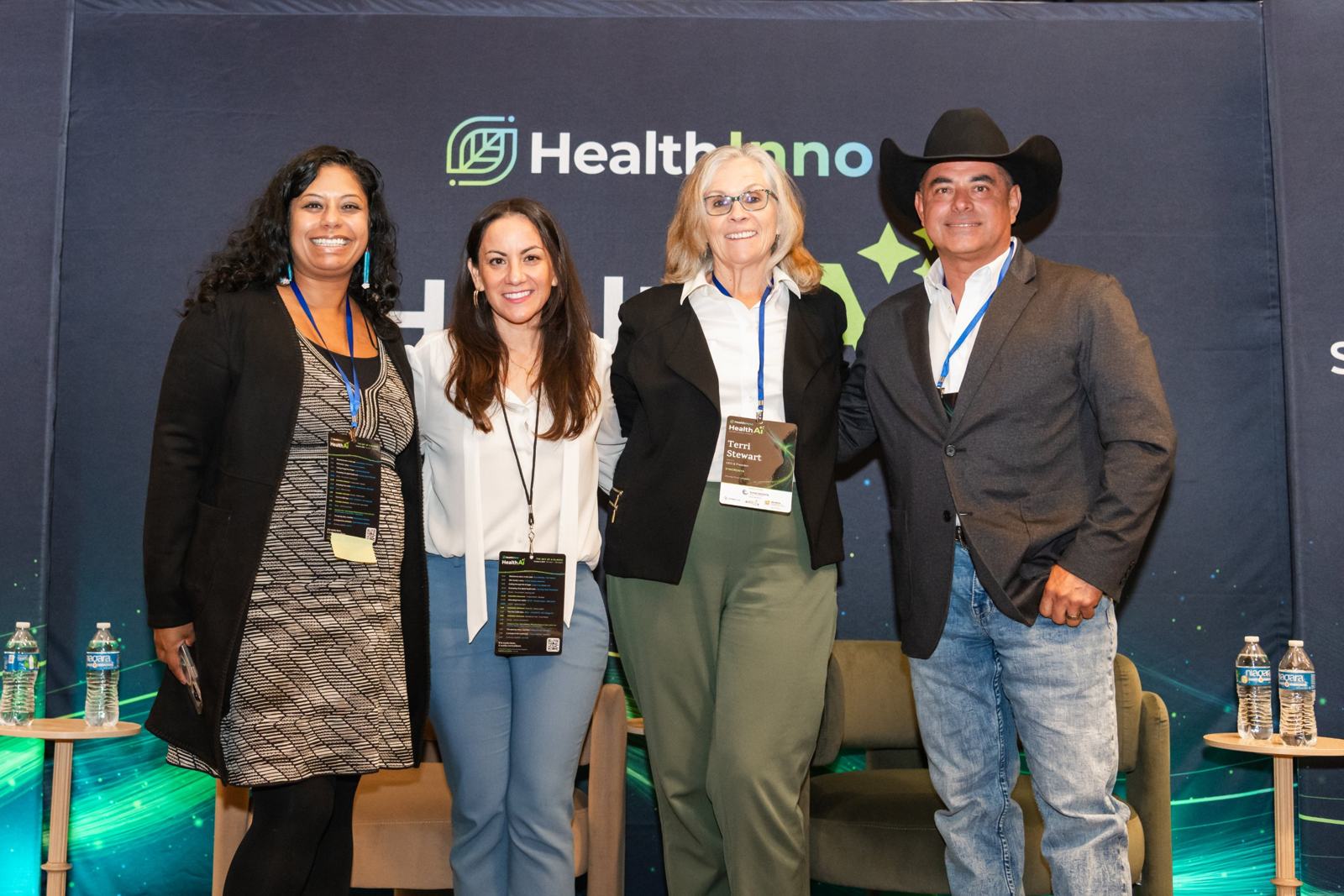
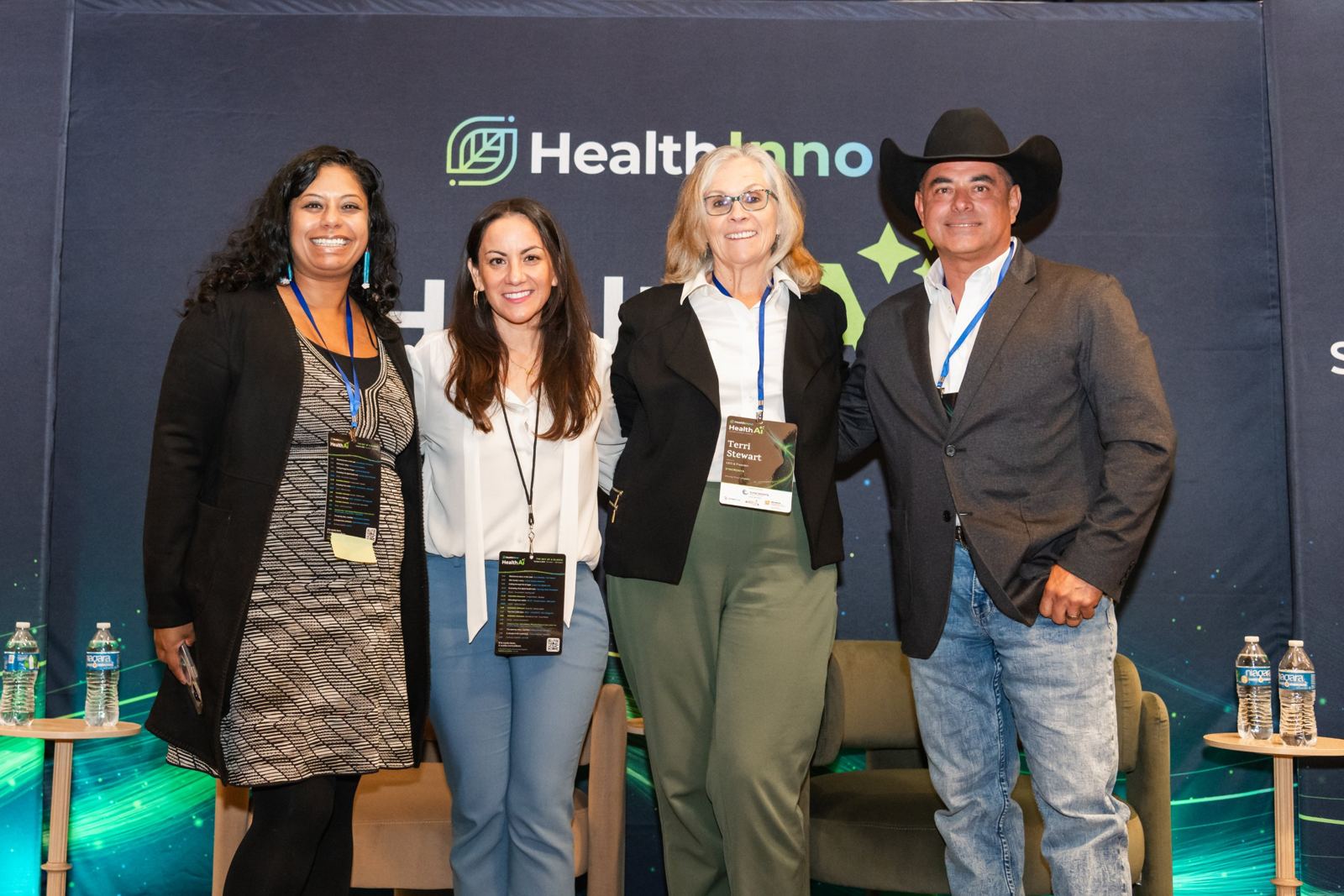
Jeff Flores, MECA TherapiesTerri Stewart, SYNCRONYSMichelle Gutiérrez, W.K. Kellogg FoundationDr. Neepa Acharya, Adhara Health, moderator
3:00 PMInnovation Showcase: WeaveIn & Cyrus HealthShowcase
Medicaid social care payments, plus telehealth and AI connecting post-acute facilities with clinicians.
Vineet Gulati & Dr. Jesus Saucedo, WeaveInChance Basinger, Cyrus Health
3:30 PMBreak: Wall & ConnectionsBig Idea Wall3:50 PMConsumer-first, tech-enabledWhat the future of care looks likePossibility
Amazon One Medical's consumer-first, tech-enabled care at national scale and patient expectations for the next five years.
Adrienne Adams, Amazon Health — One Medical
4:25 PMClosing: The opening story, rewrittenPossibility
The opening family's story retold with a different ending, informed by the day.
Stefany Goradia, HealthInno
4:50 PMA charge to the community & where we go from hereWatch
Angelica closed the day by asking attendees to take the conversations back to their organizations and keep building on them.
Angelica Maestas, HealthInno & Builders VC
5:00 PMEvening receptionCheers to what's possible
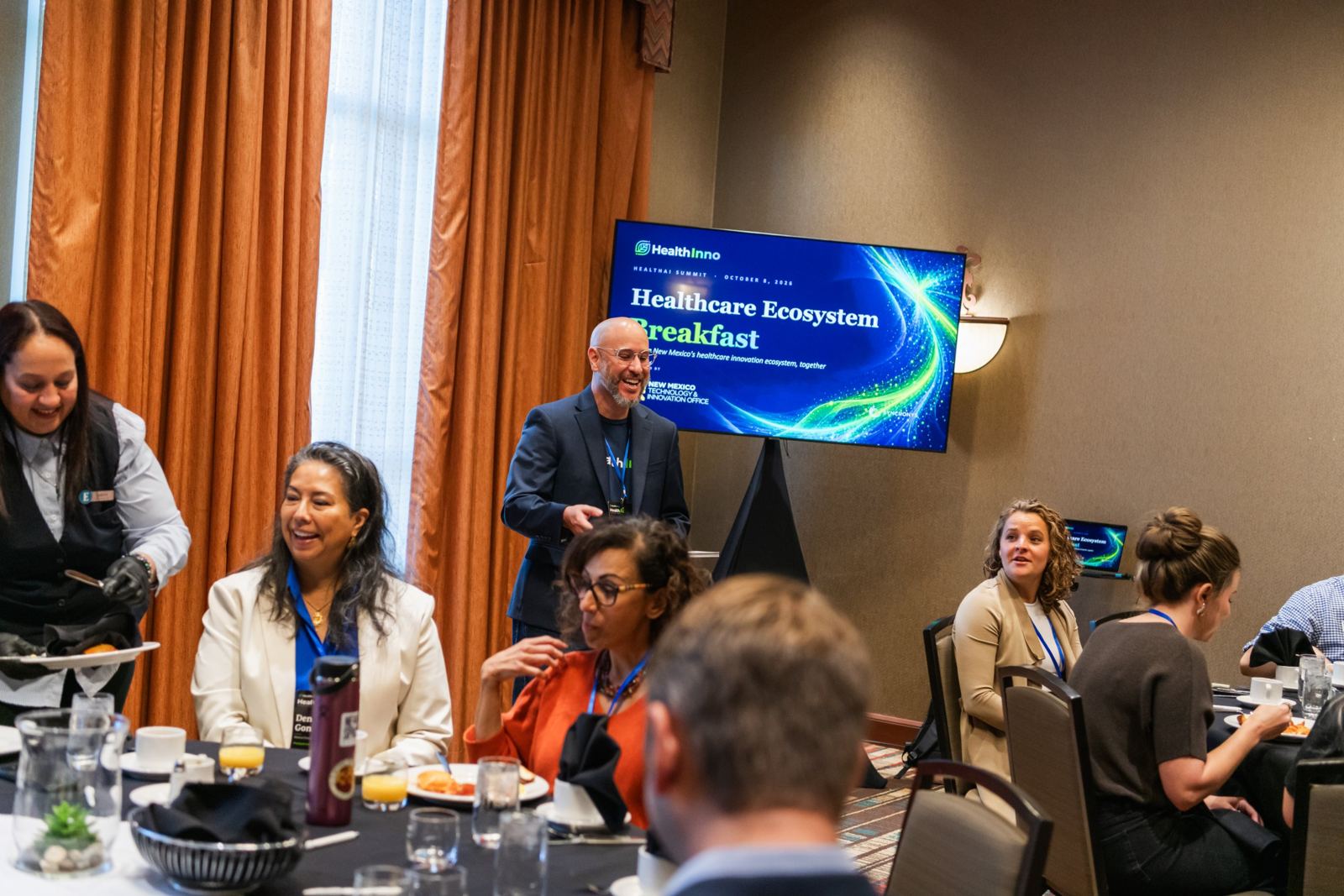
The Ecosystem Breakfast
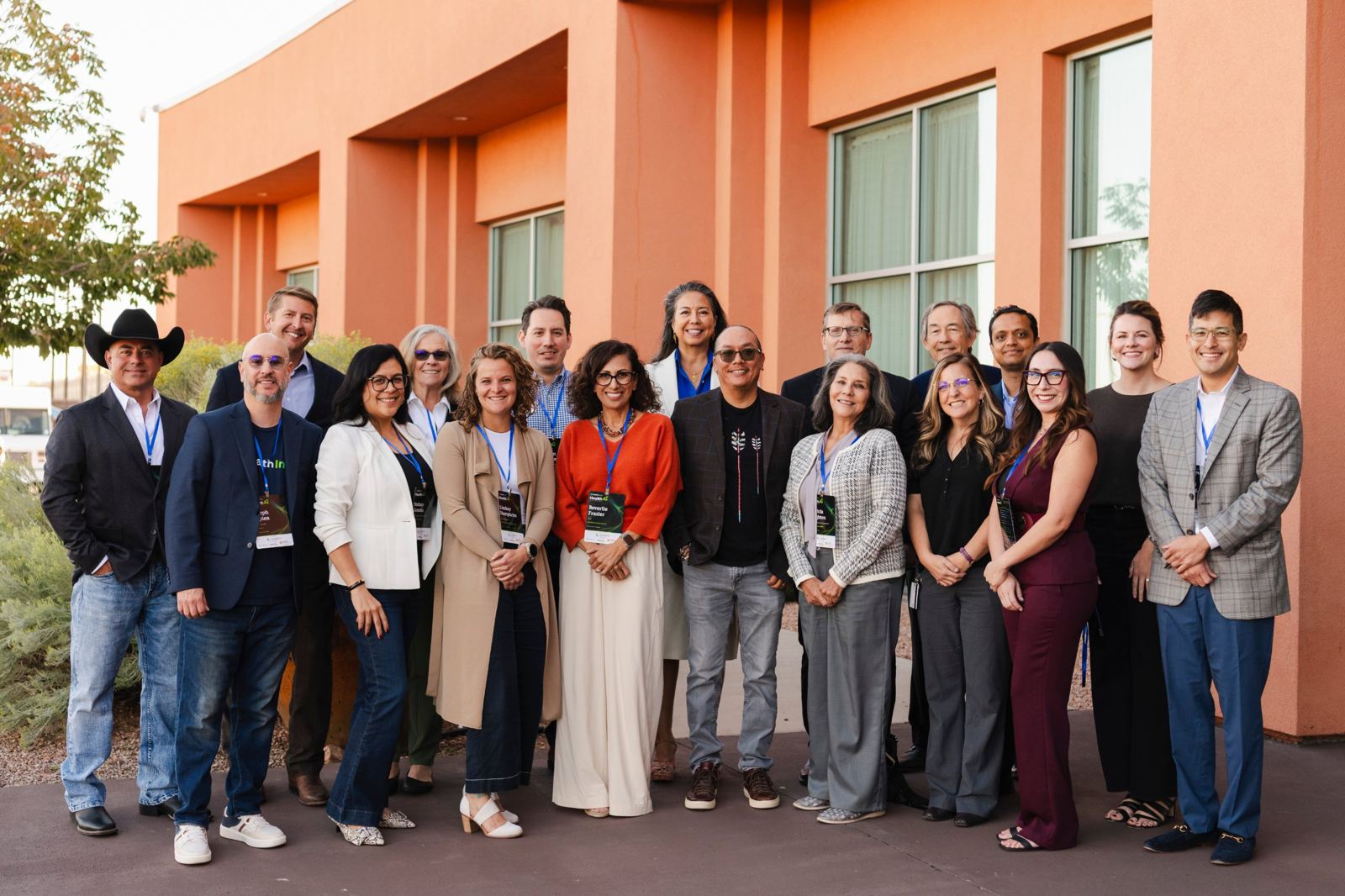
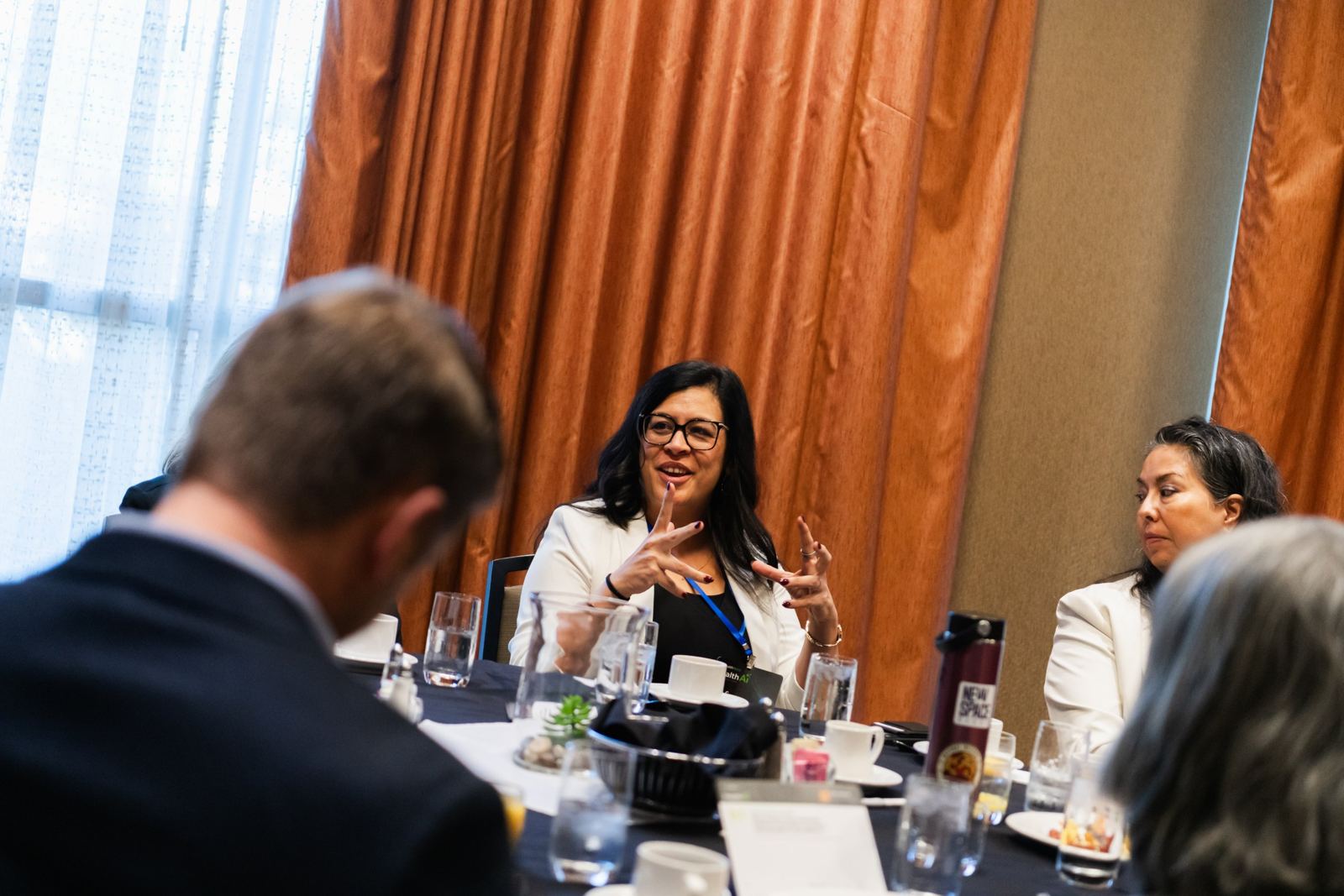
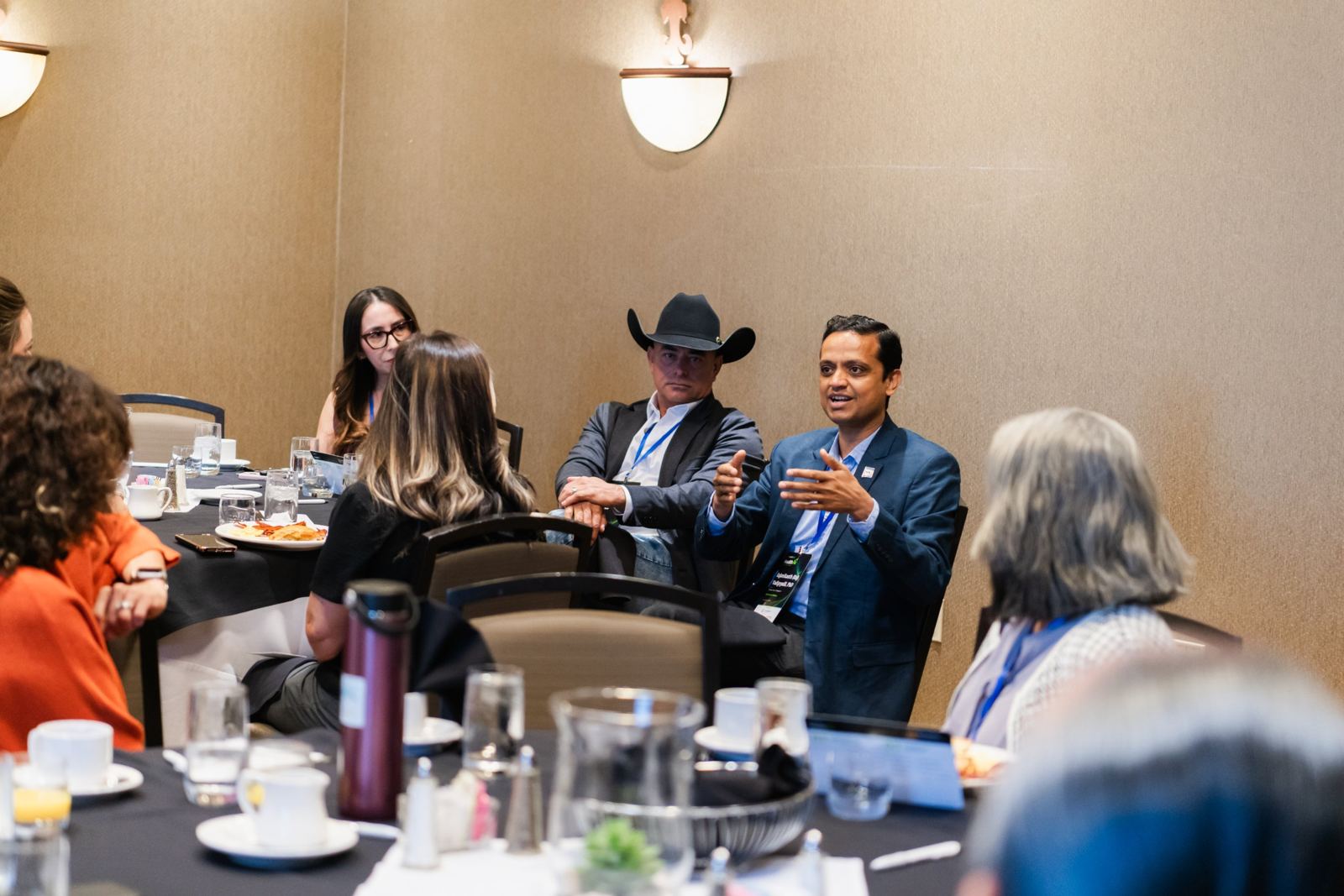
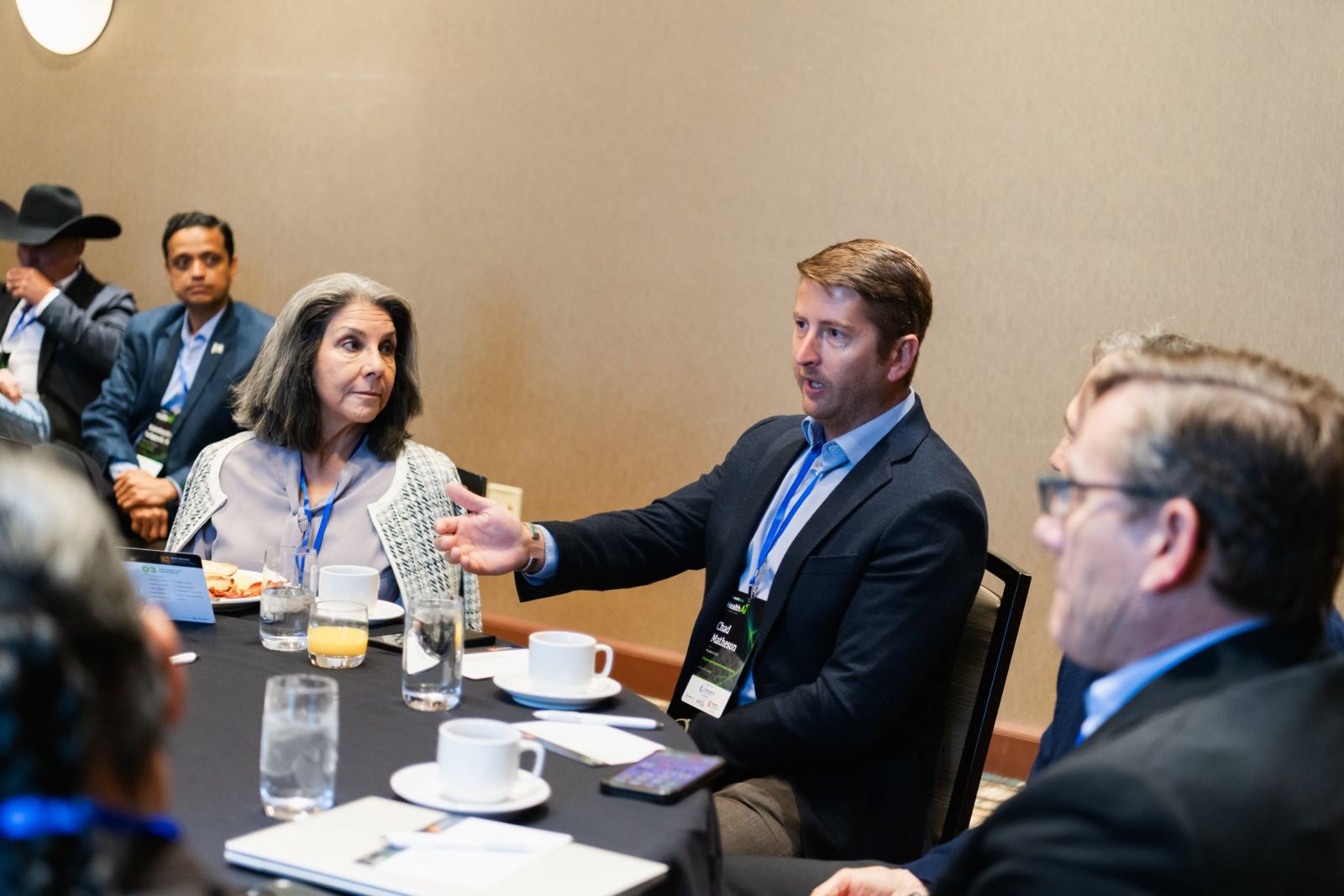
Before the summit, seventeen leaders from care delivery, the state health information exchange, both national laboratories, academic medicine, tribal leadership, commercialization, and economic development met for an hour. Co-presented with the New Mexico Technology & Innovation Office, the breakfast focused on lasting partnerships, easier patient navigation, process improvement, and New Mexico's rural, tribal, and payer realities.
Bringing Technology Into Care
Leaders discussed clinical needs, validation, reimbursement, and partners. Healthcare teams considered which tools fit and merit testing. Emerging companies need clinical feedback and evidence.
Innovation Showcase
Six Companies, Six Care Needs
Presented by
Triangle HealthPasadena, California
AI platform helping people with cancer and chronic conditions organize records and find treatments and clinical trials.
The stake: the founder had 976 interactions with the health system since his diagnosis in 2023.
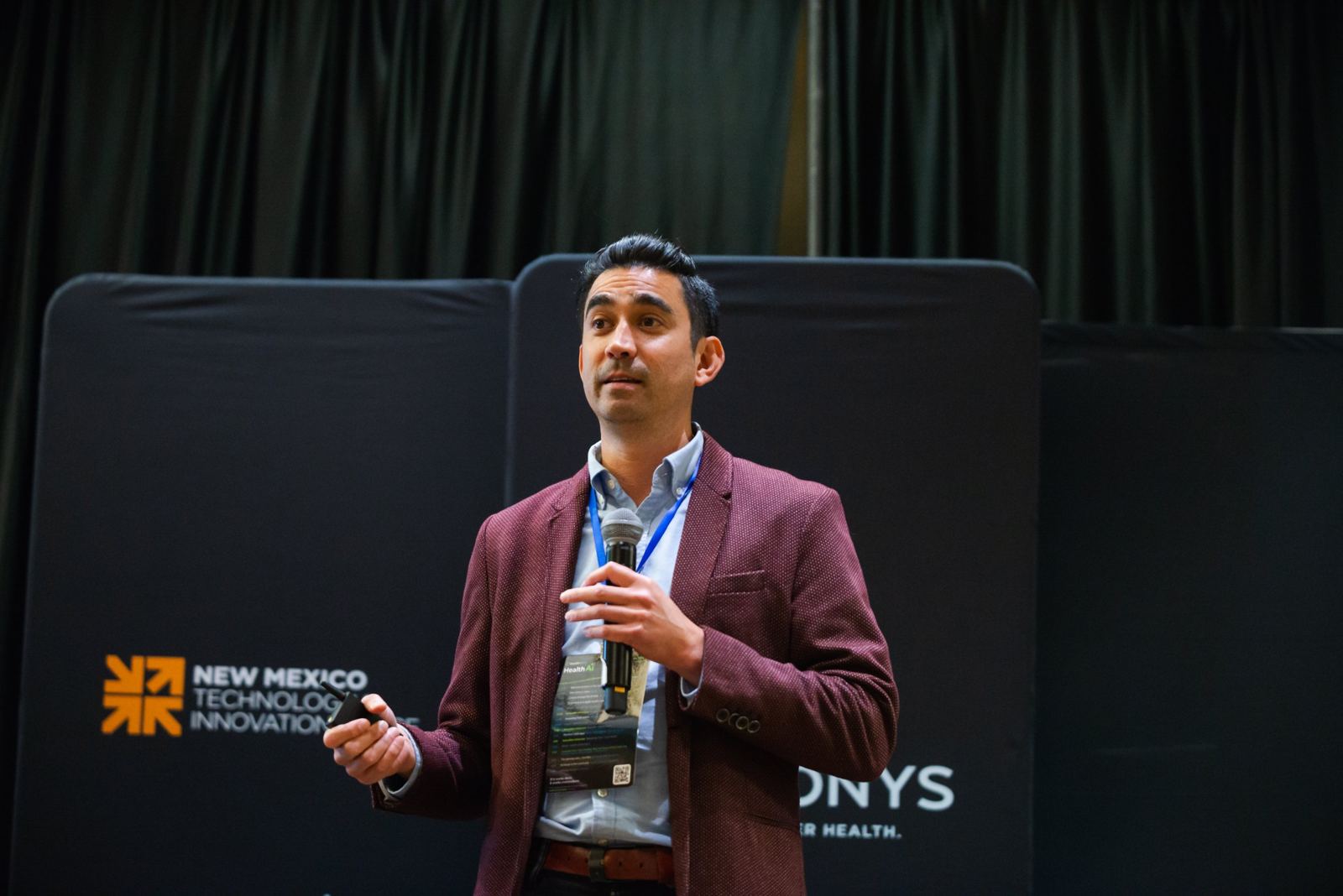
ManateeDenver, Colorado
Family-centered virtual mental healthcare for children and teens, where they already spend time.
The stake: parents are excluded from children's care most of the time; including them is essential.
BloomlifeSan Francisco, California
Remote maternal and fetal monitoring beyond the clinic, including patients far from specialists.
The stake: a high-risk mom can travel 200 miles round trip, up to twice a week, for a 30-minute monitoring test.
Adhara HealthAlbuquerque, New Mexico
New Mexico–built maternal health company developing AI-enabled care coordination and personalized support for birthing families.
The stake: most maternal deaths in New Mexico are preventable; much maternal care is outside the largest urban areas.
WeaveIn by TrustSunnyvale, California
A payments rail for Medicaid social care, combining health plan, waiver, and grant dollars into one billable encounter.
The stake: community health workers, promotoras, doulas, and tribal CHRs reach rural New Mexicans. They can't bill, so the work ends with the grant.
Cyrus HealthLehi, Utah
Telehealth and AI connect post-acute care facilities with clinicians when coordination breaks down.
The stake: at 2 a.m., care can depend on who answers the phone. A large share of nursing-facility hospitalizations is potentially avoidable.
In their words
Hear From Our Partners
SYNCRONYSPremier sponsor
New Mexico Technology & Innovation OfficeExecutive sponsor
MECA TherapiesExecutive sponsor
What attendees valued
Connections Led the Day
Networking and new connections ranked highest, followed by speakers, panels, and New Mexico-focused discussions.
Attendees valued themed lunch tables and interactive walls. They asked HealthInno for:
More open networking
New Mexico healthcare AI and innovation updates
Smaller, focused roundtables
Care-setting examples of adoption, governance, and sustainability
The next opportunity is turning those connections into shared work.
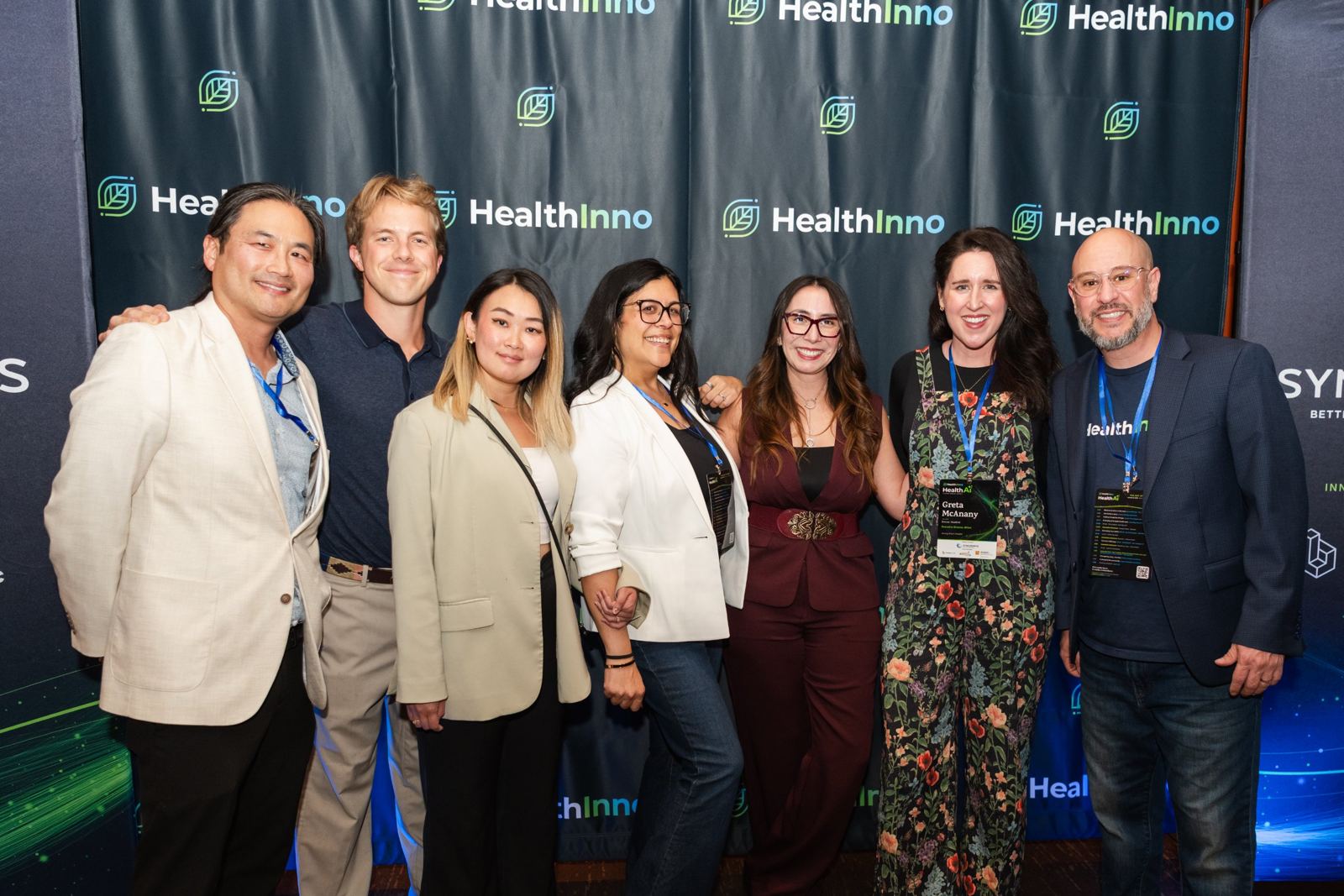
The HealthInno team. Thank you for a great day.
What's next
The Conversation Continues
HealthAI is moving to a biennial format. The next full summit is planned for 2028.
HealthInno is exploring smaller gatherings between summits and sharing more New Mexico healthcare innovation. Four priorities emerged.
More opportunities to connectSmall gatherings and focused roundtables across healthcare, research, and technology.
More practical learningLessons from technology tested and adopted in care.
More visibility for New Mexico innovationStories about statewide partnerships, pilots, and technologies.
More ways to move ideas into practiceConnect healthcare needs, researchers, technology partners, and support.
Stay in the Conversation
Join HealthInno's statewide network for updates and roundtables. Health ImpACT is our state-backed initiative to build an innovation pilot and learning network. It helps New Mexico healthcare leaders set priorities, review vetted tools, and consider structured pilots. One year in:
HealthAI attendees: watch your inbox for photos, available presentations, and summit resources.
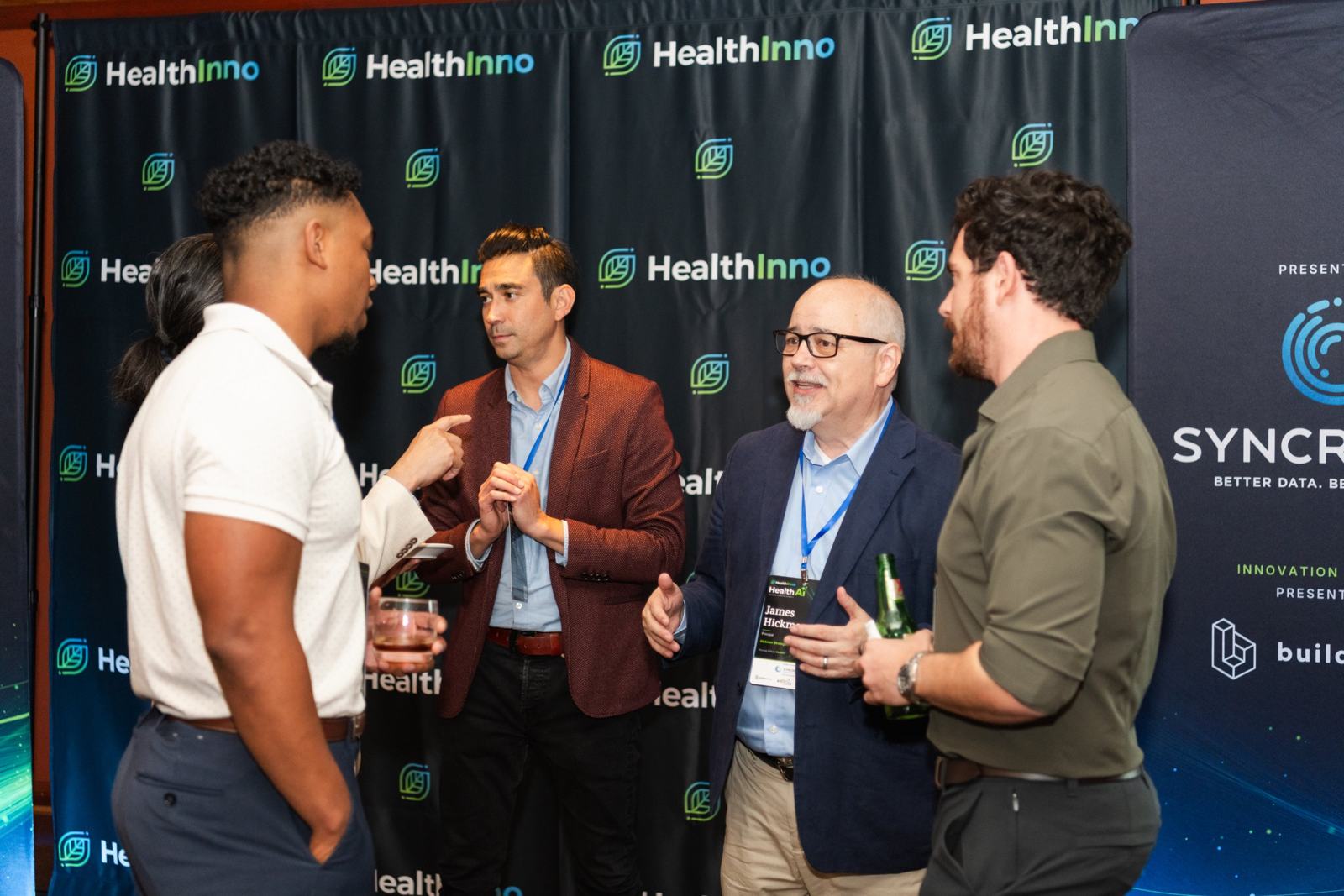
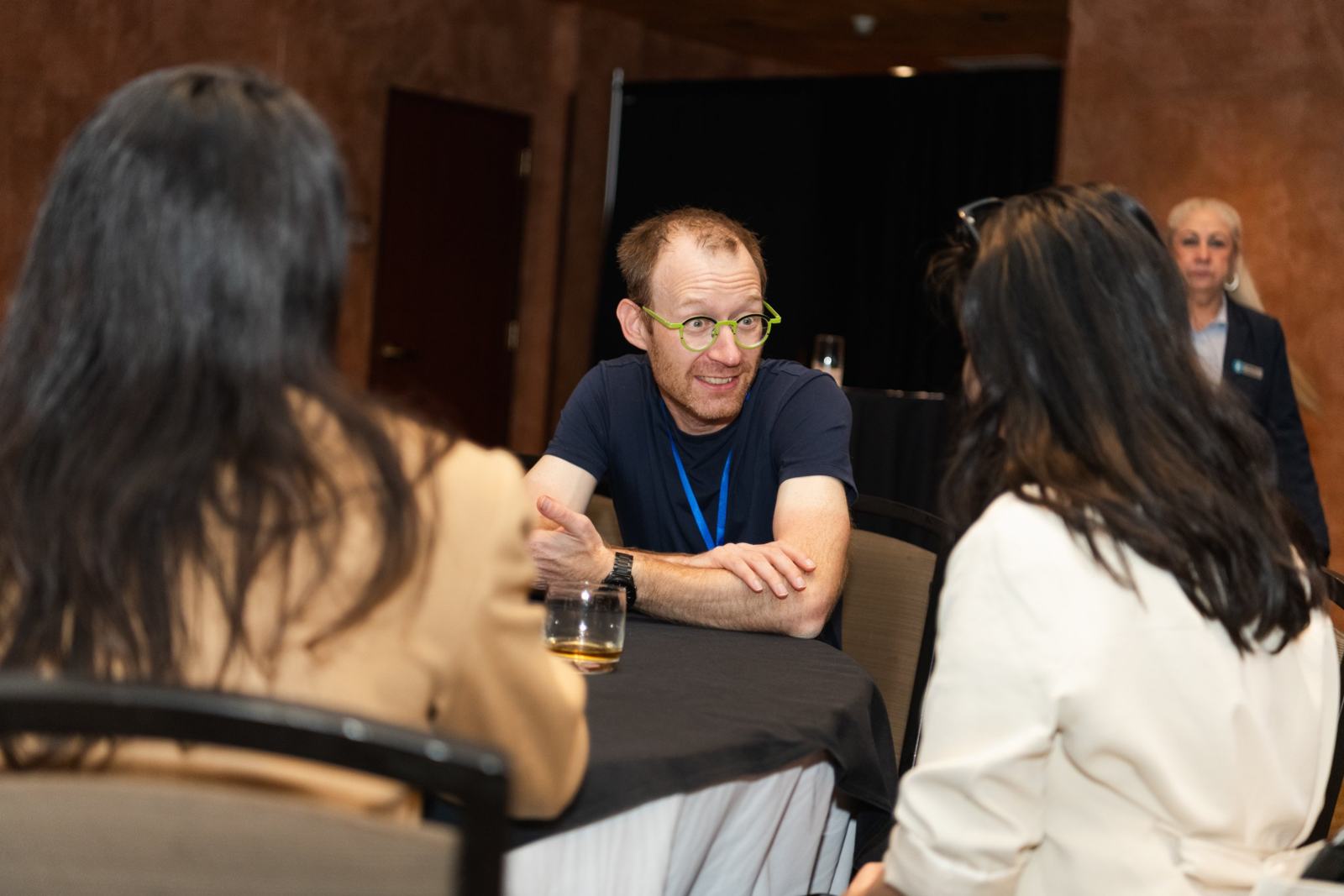
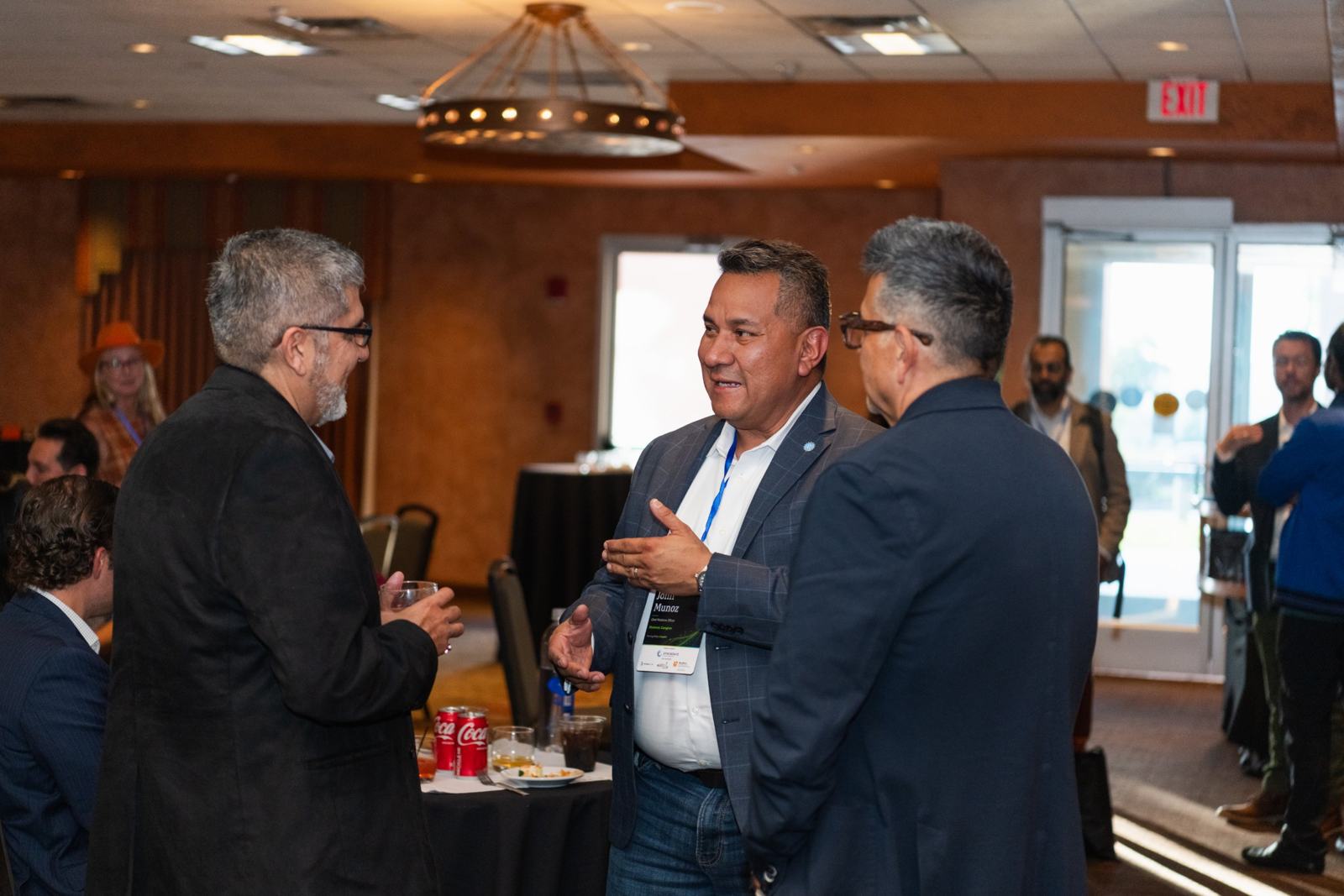
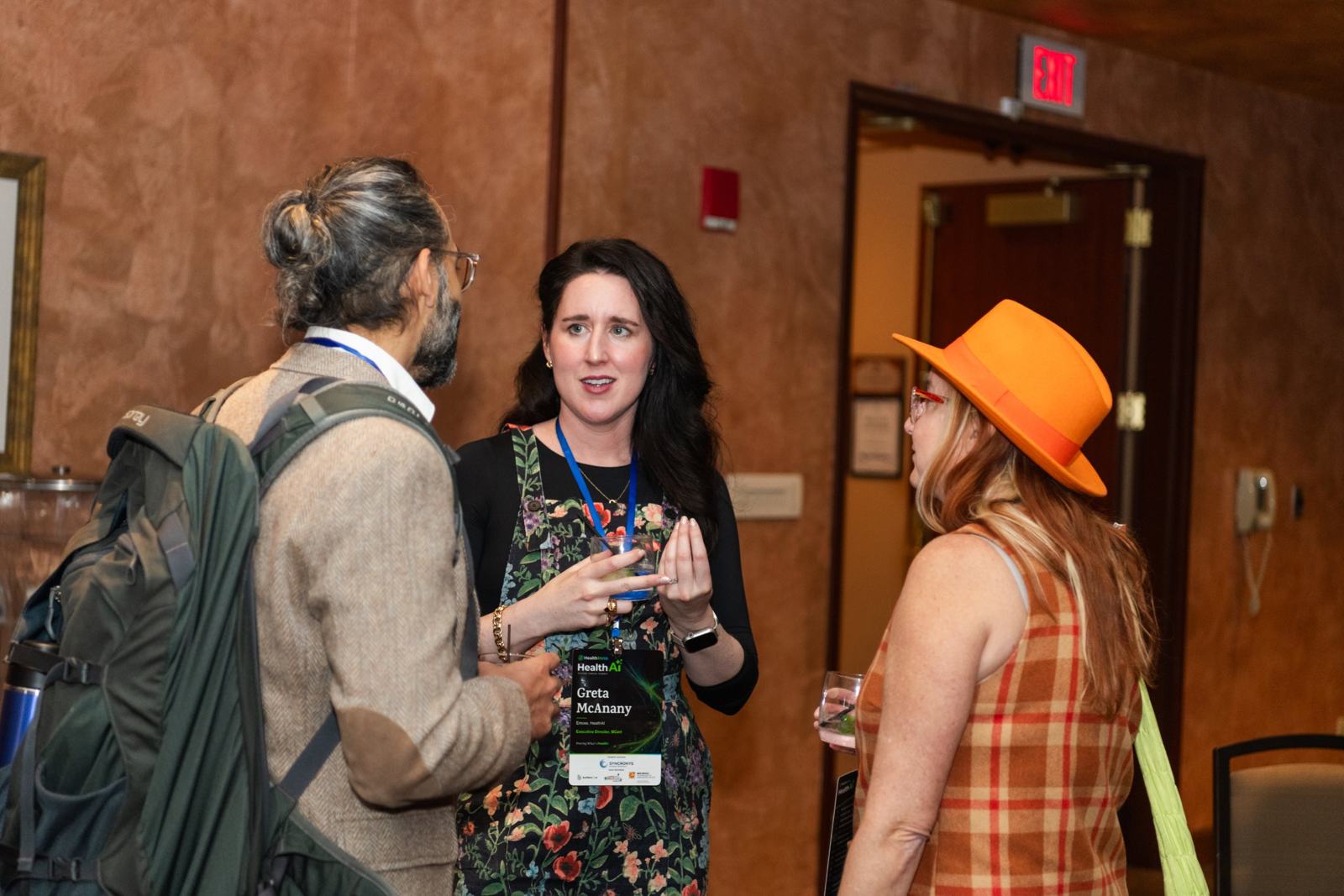
The day in pictures
HealthAI in Pictures
Photography by Stephanie Schultz.
Thank you
Thank You to Our Partners
Thanks to every HealthAI 2026 speaker, sponsor, partner, and attendee. Your perspectives will shape continued work for New Mexico healthcare. We're building something that lasts, shaped by New Mexico, for New Mexico.
Special thanks to Heiner Productions, event coordinator; Vital Voice Marketing; Exhibit Solutions for staging; Journey Home Media for AV; Stephanie Schultz for photography; and the Embassy Suites team for hosting.